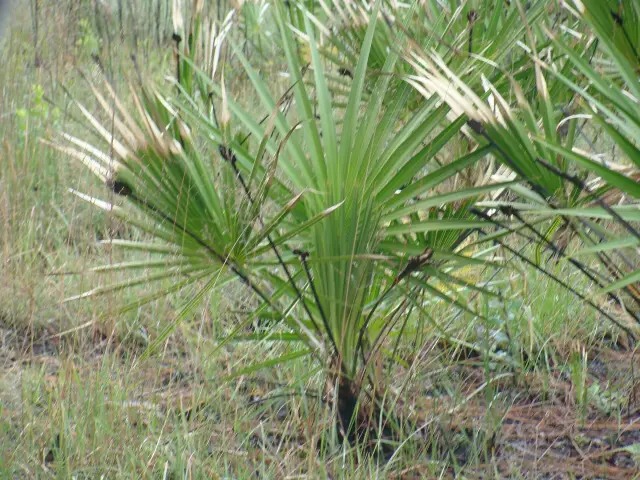
Short answer: Local honey around Sebastian comes from FDACS-registered beekeepers in Indian River County whose bees work spring saw palmetto bloom and other nectar plants. Every Florida colony must be registered and inspected, with fees capped at $100, and state law preempts city and county hive ordinances. Raw honey may be sold directly to consumers under the Cottage Food Law without a food permit.
Last verified: October 10, 2026, against the sources listed at the end of this page.
Where does local honey around Sebastian come from?
Local honey around Sebastian comes from FDACS-registered beekeepers in Indian River County whose bees forage nectar plants such as saw palmetto, the best documented honey plant of the Treasure Coast scrub.
Florida law fixes what the word means. Honey is the natural food product resulting from the harvest of nectar or honeydew by honeybees (s. 586.02, Florida Statutes). A jar labeled as local honey in Sebastian is therefore the product of hives kept within flying range of the plants that bloomed that season, and its color and flavor follow the dominant bloom.
The honey bee itself is not native to the Indian River Lagoon region. Honey bees, while naturalized to Florida, are native to Eurasia (UF/IFAS Gardening Solutions). Florida is also home to more than 300 species of native wild bees, about 29 of them found only in Florida, and none of those native species is managed for honey. Every pound of honey produced around Sebastian comes from managed Apis mellifera colonies.
Why is saw palmetto honey tied to the Sebastian area?
Saw palmetto honey is tied to Sebastian because the palm grows across the coastal scrub of Indian River County and blooms each spring, giving local bees a large nectar source.
The timing around Sebastian is documented. In spring, saw palmetto sends up 3-foot flower stalks with small yellow-white, fragrant flowers, and bees attracted to them make high-grade saw palmetto honey (UF/IFAS Gardening Solutions). The same flowers become small yellow berries that turn black and ripen August through October, after the honey harvest is over.
The source page notes a silver to blue-silver form of saw palmetto that is common on the east coast of Florida, the form found in scrub lots around Sebastian and the Sebastian Highlands. For a beekeeper near Roseland or Wabasso, a spring saw palmetto flow is the main local honey crop that does not depend on a cultivated grove.
Does the Indian River name on citrus apply to honey from Sebastian?
No, the Indian River name protected by Florida law applies to citrus fruit grown in a defined production area that includes Indian River County, not to honey made from citrus bloom.
Section 601.091 of the Florida Citrus Code sets the boundaries of the Indian River production area (s. 601.091, Florida Statutes). The line begins on the Atlantic shore at the Flagler and Volusia county line, follows the St. Johns River chain of lakes south through Brevard County, and runs to the West Palm Beach Canal, taking in Indian River County and Sebastian along the way. Only citrus grown inside that line may be labeled as Indian River fruit.
The statute governs fruit and processed citrus products, so orange blossom honey from hives near Indian River County groves carries no special state designation. Honey labels in Florida are instead governed by the state standard of identity for honey, Rule 5K-4.027, effective July 14, 2009 (Florida Administrative Code).
How are beekeepers around Sebastian regulated?
Beekeepers around Sebastian are regulated by the state: every colony must be registered with the Florida Department of Agriculture and Consumer Services after an inspection, and city and county hive ordinances are preempted.
Registration covers hobbyists, sideliners and commercial operators in Sebastian alike. All beekeepers in Florida are required to register all their bee colonies with FDACS, and the purpose is to prevent the spread of honey bee pests and diseases and to minimize the propagation of Africanized bees (UF/IFAS Extension). A local apiary inspector visits the hives first; if the colonies are healthy and free of Africanized genes, a registration number is issued after a fee that varies with colony count.
The fee a Sebastian beekeeper pays has a ceiling. Neither the registration fee nor the annual renewal fee may exceed $100, and a renewal postmarked after the anniversary date carries a $10 late fee (s. 586.045, Florida Statutes). Government agencies keeping colonies for experimental or educational purposes may be exempted from the fee.
| Rule | What it requires | Source |
|---|---|---|
| Colony registration | Every beekeeper with colonies in Florida registers with FDACS after an apiary inspection | UF/IFAS |
| Registration fee | Set by department rule, never more than $100 a year | s. 586.045 |
| Late renewal | $10 late filing fee after the anniversary date | s. 586.045 |
| Hive placement | Rule 5B-54.0105, Location of Managed Honey Bee Colonies, effective March 27, 2018 | Florida Administrative Code |
| City and county ordinances | Preempted for registered, inspected managed colonies | s. 586.10 |
| Raw honey sales | Allowed under the Cottage Food Law without a food permit, bottled in a home kitchen | UF/IFAS |
| Honey standard of identity | Rule 5K-4.027, effective July 14, 2009 | Florida Administrative Code |
Hive placement in Sebastian yards has its own rule. Rule 5B-54.0105, Location of Managed Honey Bee Colonies, took effect March 27, 2018, and lists FDACS forms 08419, 08492 and 08499 and the UF/IFAS publication ENY-160 among its references (Florida Administrative Code). For a backyard hive in Sebastian, that state rule and the compliance agreement decide setbacks and colony numbers, not the city code.
Local rules are limited. The authority to regulate, inspect and permit managed honeybee colonies is preempted to the state and supersedes any related ordinance adopted by a county or municipality (s. 586.10, Florida Statutes), so neither the City of Sebastian nor Indian River County sets its own hive rules. Hives in non-agricultural locations follow the state Beekeeper Compliance Agreement on colony density and safety, and owners governed by a homeowners association must still follow HOA rules that prohibit beekeeping (UF/IFAS Extension).
How can Sebastian beekeepers sell their honey?
Sebastian beekeepers can sell raw honey directly to consumers under Florida's Cottage Food Law without a food permit, provided it is bottled in the kitchen of a private residence.
The exemption is narrow. Prepared foods containing honey are not permitted under the Cottage Food Law, and selling honey as a retail or wholesale product requires commercial permits (UF/IFAS Extension). A beekeeper bottling in a commercial kitchen in Indian River County falls outside cottage food rules for that reason.
Removal work is separate from sales. Live colony removal, including bees, comb, brood and honey, may be done by any Florida-registered beekeeper or licensed pest control operator, while eradication is reserved to licensed pest control (UF/IFAS Extension). Shelf honey and preserves are also listed in the honey and preserves collection on Digital Towns Market, which sits apart from the Sebastian cottage food sellers described here. Digital Towns Market is our marketplace.
Labels still matter for a Sebastian cottage food seller. Sellers must comply with all regulations, including labeling, described in the Cottage Food Law (UF/IFAS Extension), and honey offered as Florida honey must meet the state standard of identity in Rule 5K-4.027. A jar sold at a table on U.S. 1 or at an Indian River County event is held to the same definition of honey as a jar on a grocery shelf.
Where do Indian River County beekeepers get training and support?
Indian River County beekeepers get training from the UF/IFAS Honey Bee Research and Extension Laboratory and its listed local club, the Treasure Coast Beekeepers Association, with county extension help in Vero Beach.
The UF/IFAS Honey Bee Research and Extension Laboratory lists the Treasure Coast Beekeepers Association as the club for Indian River County, and the same association for St. Lucie, Martin and Okeechobee counties (UF/IFAS Honey Bee Lab). The laboratory itself is in Gainesville, at 1881 Natural Area Drive (UF/IFAS Honey Bee Lab), and runs the Bee College, Master Beekeeper Program and online courses listed on its site.
Closer to Sebastian, UF/IFAS Extension Indian River County operates from Vero Beach, with its listed address at 1800 27th Street and phone (772) 226-4330 (UF/IFAS Extension Indian River County). County agents field questions on pollinators and landscapes, and Florida Master Gardener volunteers trained through the University of Florida work out of the same office.
Frequently asked questions
Does Sebastian have its own beekeeping ordinance?
No. Section 586.10, Florida Statutes, preempts the regulation, inspection and permitting of managed honeybee colonies to the state, superseding county and municipal ordinances. Beekeepers in Sebastian follow FDACS registration and the state compliance agreement, plus any HOA rules.
When do saw palmetto flowers bloom near Sebastian?
UF/IFAS describes saw palmetto sending up 3-foot flower stalks in spring with small yellow-white fragrant flowers that bees use for saw palmetto honey. The berries follow and ripen August through October across Indian River County scrub.
How much does Florida beekeeper registration cost?
The fee is set by FDACS rule based on the cost of the inspection program and may not exceed $100 for registration or annual renewal, under section 586.045, Florida Statutes. A $10 late fee applies to renewals postmarked after the anniversary date.
Can honey from Sebastian be sold at a market without a permit?
Raw honey can be sold directly to consumers under the Florida Cottage Food Law without a food permit if bottled in a private residence kitchen. Prepared foods containing honey and retail or wholesale sales need other permits, according to UF/IFAS Extension.
Which beekeeping club serves Indian River County?
The UF/IFAS Honey Bee Research and Extension Laboratory lists the Treasure Coast Beekeepers Association for Indian River County, as well as for St. Lucie, Martin and Okeechobee counties, making it the regional club for Sebastian area beekeepers.
Digital Towns Market
Honey and preserves on Digital Towns Market
 Raw Indiana Honey$3.25
 Raw Natural Honey North Eastern USA Local Pure Golden Fresh$15.00
 Honey Sticks 100% Flavored Honey USA MADE$5.00
 The Ackermann Breakfast Box Gift Set$68.00
 Coffee & Whiskey Bundle$46.00
 Vanilla & Bourbon Bundle$46.00
 Turmeric Enriched Raw Honey$22.00
 Matcha Enriched Raw Honey$22.00
Digital Towns Market is our marketplace.
Sources
- Florida Statutes s. 586.02, definitions http://www.leg.state.fl.us/statutes/index.cfm?App_mode=Display_Statute&URL=0500-0599/0586/Sections/0586.02.html Used for: definition of honey
- Florida Statutes s. 586.045, registration http://www.leg.state.fl.us/statutes/index.cfm?App_mode=Display_Statute&URL=0500-0599/0586/Sections/0586.045.html Used for: fee cap and late fee
- Florida Statutes s. 586.10, preemption http://www.leg.state.fl.us/statutes/index.cfm?App_mode=Display_Statute&URL=0500-0599/0586/Sections/0586.10.html Used for: state preemption of local hive ordinances
- Florida Statutes s. 601.091, citrus production areas http://www.leg.state.fl.us/statutes/index.cfm?App_mode=Display_Statute&URL=0600-0699/0601/Sections/0601.091.html Used for: Indian River production area boundary
- UF/IFAS Extension Polk County, Beekeeping in Florida: Important Beekeeping Regulations (Aug. 7, 2025) https://blogs.ifas.ufl.edu/polkco/2025/08/07/beekeeping-in-florida-important-beekeeping-regulations/ Used for: registration, inspection, compliance agreement, HOA, cottage food, removal
- UF/IFAS Honey Bee Research and Extension Laboratory, beekeeper associations https://entnemdept.ufl.edu/honey-bee/extension/beekeeper-associations/ Used for: Treasure Coast Beekeepers Association for Indian River County
- UF/IFAS Honey Bee Research and Extension Laboratory, About Us https://entnemdept.ufl.edu/honey-bee/about-us/ Used for: lab location
- UF/IFAS Gardening Solutions, Saw Palmetto https://gardeningsolutions.ifas.ufl.edu/plants/trees-and-shrubs/palms-and-cycads/saw-palmetto/ Used for: bloom, honey, berries
- UF/IFAS Gardening Solutions, Gardening for Bees https://gardeningsolutions.ifas.ufl.edu/design/gardening-with-wildlife/gardening-for-bees/ Used for: native bee counts, honey bee origin
- Florida Administrative Code Rule 5K-4.027, Standard of Identity Honey https://www.flrules.org/gateway/ruleNo.asp?id=5K-4.027 Used for: honey standard effective date
- Florida Administrative Code Rule 5B-54.0105, Location of Managed Honey Bee Colonies https://www.flrules.org/gateway/ruleNo.asp?id=5B-54.0105 Used for: hive placement rule effective date
- UF/IFAS Extension Indian River County https://sfyl.ifas.ufl.edu/indian-river/ Used for: county extension office address
- U.S. Census Bureau ACS 2023 https://www.census.gov/programs-surveys/acs Used for: Sebastian demographics