Short answer: Alligators live in the St. Sebastian River, the C54 canal and the canal, ditch and swale network that drains the Sebastian Highlands to the river. A nuisance alligator in Sebastian, generally one at least 4 feet long that threatens people, pets or property, is reported to the FWC hotline at 866-392-4286, and the state issues a permit to a contracted trapper who removes it rather than relocating it.
Last verified: October 11, 2026, against the sources listed at the end of this page.
Where do alligators live around Sebastian?
Alligators live in the St. Sebastian River, the C54 canal and the canals, ponds and swales that drain Sebastian, in fresh and slightly brackish water across Indian River County.
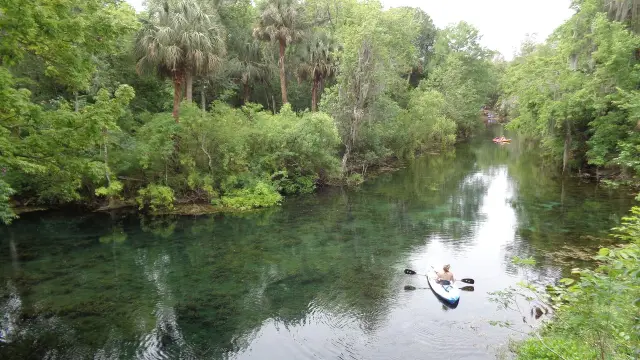
Alligators live in nearly every fresh or slightly salty body of water in and around Sebastian. The Florida State Parks listing for the St. Sebastian River Preserve says alligators can be seen in the St. Sebastian River and the C54 canal, the drainage canal that runs along the north side of the preserve near the Brevard County line. A December 13, 2023 report from WQCS on land protected along the South Prong lists the alligator with the manatee, gar and heron rookeries as residents of the river on the southwestern edge of the City of Sebastian.
The animals are not unusual here, and the numbers explain why. The Florida Fish and Wildlife Conservation Commission estimates about 1.3 million alligators in Florida and says they live in all 67 counties, including Indian River County. According to the FWC alligator facts page, the species prefers freshwater lakes and slow-moving rivers and their wetlands, but it also uses brackish water. That matters on the St. Sebastian River, which Florida State Parks describes as brackish, holding both freshwater and saltwater fish such as tarpon, snook and bass. Alligator habitat therefore runs from the cypress reaches of the North and South Prongs down toward the river mouth at Sebastian, where the water turns saltier as it meets the Indian River Lagoon.
Why do alligators show up in Sebastian Highlands canals and backyard swales?
Alligators reach Sebastian Highlands backyards through the canal, ditch and swale network built in the late 1950s, which links every neighborhood to the St. Sebastian River.
The answer is the way the city was built. The City of Sebastian stormwater division reports that in the late 1950s General Development Corporation designed and constructed the street and drainage infrastructure to support approximately 15,000 single-family home sites, most of which were developed by the late 1990s. That grid is the Sebastian Highlands, and its water does not sit still: the city states that the majority of its stormwater runoff moves through a system of canals, ditches and swales to the St. Sebastian River and on to the Indian River Lagoon.
Those canals connect neighborhoods directly to the river. The City of Sebastian says it lies along nearly 9 miles of the lower eastern and southern banks of the St. Sebastian River and covers about 9,000 acres of the 100,000-acre Sebastian River Watershed. An alligator moving along a drainage canal from the river can end up in a retention pond behind a Sebastian Highlands street, at the edge of a city park lake or in a roadside swale after heavy rain. The FWC page on living with alligators ties this pattern to growth across the state: many residents seek waterfront homes and spend more time near water, which brings more alligator and human interactions and more potential for conflict.
Agriculture west of town adds water to the same system. The city notes that agricultural lands west of Sebastian account for a major portion of the runoff reaching the St. Sebastian River through man-made drainage, the same canal network alligators use to travel between the marshes near Fellsmere and the river at Sebastian.
How is a nuisance alligator handled in Sebastian?
A nuisance alligator in Sebastian is reported to the FWC hotline at 866-392-4286, and the state sends a contracted trapper with a permit to remove it.
Nuisance alligators in Sebastian are handled by the state, not by the city or county. Indian River County Animal Control lists the FWC Alligator Hotline, 866-392-4286, under its contacts for non-domestic animals, alongside the FWC manatee and sea turtle numbers. The Sebastian Police Department and county animal control deal with domestic animals; alligators belong to the FWC Statewide Nuisance Alligator Program, known as SNAP.
The SNAP rules set the threshold. Generally, an alligator is deemed a nuisance if it is at least 4 feet in length and the caller believes it poses a threat to people, pets or property. Smaller alligators in places such as swimming pools or garages can also be removed. When a complaint qualifies, SNAP issues a permit to one of its contracted nuisance alligator trappers authorizing removal. The person calling must be able to grant legal access to the property where the alligator is, and SNAP does not permit removal from private or publicly managed property without permission from the owner or managing authority, which for a canal in Sebastian can mean the city or a drainage district.
Removed alligators are not moved to another lake. The FWC explains that relocated alligators often try to return to their capture site, can create problems along the way, and would cause fighting if released among the established alligators of a remote area. Because removal of nuisance animals does not significantly affect a statewide population of about 1.3 million, the program removes rather than relocates. For Sebastian homeowners on a canal lot, that means a call to 866-FWC-GATOR starts a state process with a contracted trapper and a permit, not a city work order.
When are alligators most active around Sebastian?
Alligators around Sebastian are most active and visible from spring through early fall, when temperatures rise and the April to September breeding cycle runs.
Activity follows temperature. The FWC alligator facts state that alligators are most active between 82 and 92 degrees F, stop feeding when the temperature drops below approximately 70 degrees F, and become dormant below about 55 degrees F. Sebastian winters rarely stay that cold for long, so alligators in the St. Sebastian River and the Sebastian Highlands canals may bask on warm winter afternoons and then become much more visible as spring heats up. Sebastian Daily relayed that FWC message on March 13, 2023: warmer temperatures mean alligators are more active and visible, especially in Sebastian.
Spring is also breeding season. According to the FWC, courtship begins in early April and mating occurs in May or June. Females build a mound nest of soil, vegetation or debris and deposit an average of 32 to 46 eggs in late June or early July, incubation takes about 63 to 68 days, and hatching occurs from mid-August through early September. About one third of nests are lost to raccoons or flooding, a real factor along the low banks of the St. Sebastian River during the summer rainy season. Hatchlings in late summer explain the small alligators sometimes seen in Sebastian retention ponds in September.
Size records show what the region can produce. The FWC lists the Florida state record for length as a 14 foot 3-1/2 inch male from Lake Washington in Brevard County, on the St. Johns River north of the Indian River County line. Females rarely exceed 10 feet, while males can grow much larger.
| Stage or condition | Timing or threshold |
|---|---|
| Courtship | Early April |
| Mating | May or June |
| Egg laying (32 to 46 eggs) | Late June or early July |
| Incubation | About 63 to 68 days |
| Hatching | Mid-August through early September |
| Feeding stops | Below about 70 degrees F |
| Dormancy | Below about 55 degrees F |
Where are alligators hunted near Sebastian?
Alligator hunting near Sebastian happens under FWC permits on public water such as the Stick Marsh west of Fellsmere, not in city neighborhoods.
Recreational harvest happens under the FWC Statewide Alligator Harvest Program, not inside Sebastian neighborhoods. The program uses harvest units on public waters plus countywide units; most Florida counties, including Indian River County, are established as harvest units, and a countywide permit allows two alligators from areas the hunter can legally access, excluding designated water bodies and protected public properties. Each permit holder is assigned a week, with Period 1 running Aug. 15 to Aug. 21, and hunters who have not filled their tags may continue in the open period, which runs Sept. 12 to Nov. 1. Hunters must file an Alligator Harvest Report Form within 24 hours.
The best-known hunting water near Sebastian is west of Fellsmere. The FWC describes the Farm 13/Stick Marsh, formally the St. Johns Water Management Area, as a 6,500-acre impoundment in northwest Indian River County and lists Sebastian and Fellsmere among the closest towns. Vero News reported on August 23, 2018 that the Stick Marsh held the largest average length in the state for alligators harvested in 2017, 10 feet 1.6 inches, and that 26 animals measuring 11 feet or longer were taken there the season before. The same report noted the state has held the recreational hunt every summer since 1988.
| Period | Dates |
|---|---|
| Period 1 | Aug. 15 to Aug. 21 |
| Period 2 | Aug. 22 to Aug. 28 |
| Period 3 | Aug. 29 to Sept. 4 |
| Period 4 | Sept. 5 to Sept. 11 |
| Open period | Sept. 12 to Nov. 1 |
What rules apply to feeding and approaching alligators in Sebastian?
Feeding an alligator anywhere in Sebastian is illegal under Florida rule 68A-25.001, and state agencies ask residents to keep their distance and keep pets away from the water.
Feeding is illegal statewide. Florida Administrative Code rule 68A-25.001 states that no person shall intentionally feed, or entice with feed, any crocodilian unless it is held in captivity under an FWC permit. The rule applies equally to a lake at a Sebastian park, a canal behind a Sebastian Highlands home and the St. Sebastian River. Fed alligators lose their fear of people, which is how many become nuisance cases under SNAP.
On state land the message is the same. Florida State Parks asks visitors who meet alligators on the St. Sebastian River to give them a wide berth and not to feed them, and notes that alligators, although rarely, have made unprovoked attacks on pets and people. The FWC guidance repeated by Sebastian Daily in 2023 asks residents to keep a safe distance, swim only in designated areas during daylight and keep pets on a leash and away from the water's edge. The FWC also states that alligators under 4 feet are not large enough to be dangerous to people or pets unless handled, and that handling one is illegal, so small alligators in Sebastian yards also go through the 866-FWC-GATOR hotline.
Frequently asked questions
Who removes an alligator from a canal or pool in Sebastian?
The Florida Fish and Wildlife Conservation Commission. A call to 866-FWC-GATOR (866-392-4286) goes to the Statewide Nuisance Alligator Program, which issues a permit to a contracted trapper when the animal is at least 4 feet long and believed to threaten people, pets or property.
Are alligators in the St. Sebastian River even though it is brackish?
Yes. Florida State Parks lists alligators in the St. Sebastian River and the C54 canal at the preserve, and the FWC notes that alligators, while preferring fresh water, also use brackish habitats like the lower river near Sebastian.
Does the FWC relocate nuisance alligators caught in Sebastian?
No. The FWC says relocated alligators often try to return to where they were caught and would fight with resident alligators at a remote release site, so nuisance alligators removed under SNAP are not moved to another lake.
Is it legal to feed an alligator in an Indian River County pond?
No. Florida rule 68A-25.001 makes it unlawful to intentionally feed or entice with feed any crocodilian unless it is held in captivity under an FWC permit, and the rule applies in every Indian River County pond and canal.
When do alligators nest near Sebastian?
The FWC reports courtship in early April, mating in May or June, egg laying in late June or early July and hatching from mid-August through early September, which is when hatchlings appear in waters around Sebastian.
Sources
- Statewide Nuisance Alligator Program (FWC) https://myfwc.com/wildlifehabitats/wildlife/alligator/snap/ Used for: nuisance definition, hotline, permits, no relocation, 1.3 million alligators
- Alligator Facts (FWC) https://myfwc.com/wildlifehabitats/wildlife/alligator/facts/ Used for: breeding calendar, temperature thresholds, brackish habitat, Brevard County state record
- Living with Alligators and Crocodiles (FWC) https://myfwc.com/conservation/you-conserve/wildlife/alligators/ Used for: all 67 counties, waterfront growth and conflict, safety guidance
- Statewide Alligator Harvest Program (FWC) https://myfwc.com/wildlifehabitats/wildlife/alligator/harvest/ Used for: harvest periods, countywide units, harvest reporting
- Farm 13/Stick Marsh fishing site (FWC) https://myfwc.com/fishing/freshwater/sites-forecasts/ne/farm-13stick-marsh/ Used for: 6,500-acre impoundment in northwest Indian River County near Sebastian and Fellsmere
- St. Sebastian River Preserve State Park, Experiences and Amenities (Florida State Parks) https://www.floridastateparks.org/parks-and-trails/st-sebastian-river-preserve-state-park/experiences-amenities Used for: alligators in the St. Sebastian River and C-54 canal; brackish river
- Indian River Land Trust acquires 36 more acres (WQCS, December 13, 2023) https://www.wqcs.org/wqcs-news/2023-12-13/indian-river-land-trust-acquires-36-mores-acres-to-its-protected-green-space-in-indian-river-county Used for: St. Sebastian River wildlife including alligator; only natural tributary of the lagoon in the county
- The History of Sebastian Drainage System (City of Sebastian) https://cityofsebastian.org/434/The-History-of-Sebastian-Drainage-System Used for: 9 miles of river frontage, GDC canals and swales, 9,000 acres of the watershed
- Animal Control (Indian River County) https://indianriver.gov/services/emergency_services/animal_control/index.php Used for: county listing of the FWC alligator hotline for non-domestic animals
- Fla. Admin. Code R. 68A-25.001, Feeding or Enticement of Alligators or Crocodiles Unlawful https://www.law.cornell.edu/regulations/florida/Fla-Admin-Code-Ann-R-68A-25-001 Used for: feeding prohibition
- Tips to safely co-exist with alligators in Sebastian (Sebastian Daily, March 13, 2023) https://www.sebastiandaily.com/community/tips-to-safely-co-exist-with-alligators-in-sebastian-and-other-florida-areas-42461 Used for: seasonal activity in Sebastian
- Hunting alligators in the Stick Marsh (Vero News, August 23, 2018) https://veronews.info/?p=32461 Used for: Stick Marsh harvest size records 2017
- U.S. Census Bureau American Community Survey 2023 https://www.census.gov/programs-surveys/acs Used for: Sebastian population and median age