About Digital Towns · Founder
About the Founder
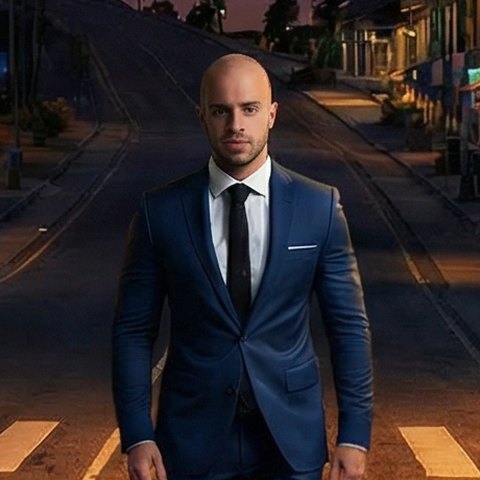
Rytas Dirse
Solo Founder & AI Architect, Digital Towns
Digital Towns - When a Farmer learns code
Digital Towns is built by one person. I designed and engineered every part of it: the architecture, the full stack, the AI pipeline and the deployment. It took five iterations, countless rewrites and thousands of hours. The goal never changed: give people in real towns the facts about where they live, and give newcomers the information they need without having to hunt, scroll, post or swim through a thousand ads. It cuts out the noise and leaves pure signal for those who want it.
Three flags
I hold three citizenships: American, Canadian and Lithuanian. Of the four of us kids, I'm the only one who ended up in the States. I like to joke it's because I was also the only one who had to pledge allegiance to the American flag in high school. College didn't stick. I spent a year at university in Lithuania, mostly having fun while pretending to try.
I'm not a veteran. My mother's father was: a Lithuanian who worked as an engineer on American technology that was still in use, the last time I checked. My mother, his daughter, worked with farmers around Norfolk County on payroll and some of the earliest point-of-sale and payment processing systems, long before most of the tools we have today existed.
Fourth-generation farmer
Farming in our family started with my great-grandfather in Lithuania. My grandfather grew tobacco, and I spent my childhood walking those fields barefoot, too young to work but always underfoot. When my dad took the farm into organic produce, territory nobody in the family had worked before, we all pitched in. I was in seventh grade, learning it right alongside him as he figured it out. During that time, I learned a lot about farmers markets, everyone's gotta eat.
His cancer diagnosis changed my direction. Through his medical marijuana license I found the medical marijuana industry in Arizona and started my career as a commercial grower.
During COVID I went home to Canada to help on the family farm for the summer. That turned into a year with a cannabis grow-tech startup built around high-pressure aeroponics. My Arizona experience made me the only qualified candidate in the area to help run and develop an extremely advanced system.
Always building something
Reselling has run alongside the growing the whole way: flipping pallets, thrifting, sourcing used books for Amazon FBA. I taught myself plant tissue culture and turned it into a production and education business. Through live sales, it grew from a standing start to more than 30,000 orders and around $1M in sales in two years, with a 4.9-star rating.
I ranked in the top 1% of sellers on Palmstreet, a Silicon Valley-backed live commerce app with a China-based team, two years in a row, and by the time I left I accounted for around 1% of the platform's total sales. Palmstreet was formerly known as the Plantstory app. I never understood how anyone can abandon their name and change it for real. It takes a lot of energy to build a brand. It's part of your identity and your core values. It becomes a reflection of who you are and what you believe in and what you will tolerate. I was the only US tissue culture producer to reach that level. As a solo operator with an internationally recognized US tissue culture brand, I was competing against the largest nurseries in the country and imports from mega tissue culture labs around the world, mainly from China. That work led me into brand preservation and redevelopment, and into live, gamified commerce.
Poker taught me systems
In 2016 I moved to Las Vegas to play poker professionally. I cashed in my first two World Series of Poker events back to back, including a 47th-place finish out of 667. GGPoker later sponsored me for Team Canada during its Canadian rollout, where I made the final table of a ring event. Online, I finished second in a major 30-day leaderboard spanning 800,000 hands.
Poker shows you how people act when something scarce and valuable is on the line. A system that lasts needs fair rules, real rewards and a reason to keep showing up.
It also teaches you stoicism, fearlessness, patience and timing. You keep making the best decision you can by weighing every variable and projecting where each option in front of you could lead. You learn to read human behavior and tendencies, and you learn emotional control and risk management.
For example, it's a lot easier to go all-in when you barely have any chips left in front of you than to call an all-in when you have a bigger stack. You will mostly be giving up equity, if you know what I mean.
You learn strategy, and how to adapt it to the situation in front of you. Most importantly, tournament poker teaches you that in order to win games, you have to play to win.
Gamified commerce
Microcultivate plant tissue culture production started in a Phoenix garage, with its first sales on Whatnot. Shout out to Whatnot for making that possible. From one Phoenix garage to the next, thank you. I ran three-day live game shows, streaming nonstop with rare plants as the prizes. People came for the plants and stayed for the show. Regulars got to know each other, and the chat became a real place. Commerce and community don't have to be separate.
A bridge between worlds
Digital Towns lives in the space between the physical and the digital. It connects the two in ways that weren't possible before. Your town is real: the streets, the shops, the people you pass every day. The internet is where you go to find out about all of it. Most platforms pull you away from the place you live. Digital Towns is built to bring you back to it. Because it's mapped to real places, it also works as a canvas: anything built on it can follow the laws and regulations of each specific area.
Building that bridge takes a specific kind of work. Every town has to be researched, verified and kept current, fact by fact. To build it right and solve real problems, the decisions can't be driven by revenue. You can't solve big problems caused by revenue-based decisions with a revenue-based focus. The moment ad dollars decide what you see, the signal turns back into noise. So I fund it the way I always have: by reselling, producing and supporting other small American businesses.
Community is currency
The most valuable thing anyone has is the people around them and how they treat each other. Today, if you start an online business, you have to pay a tech company in another state just to let your neighbors know you exist. To be fair, social media ads can be extremely powerful. You wouldn't believe how much impact a simple $10 geo-targeted Meta ad can have in a small town with no competition. Digital Towns is built so the value a community creates stays in that community.
- Proximity sourcing keeps money circulating close to home whenever possible.
- Our affiliate program gives everyone a way to earn by supporting the brands we curate on the platform.
- Auctions, starting soon, will bring deal hunters in and put those brands in front of them.
- Games bring the engagement instead of ads and noise. The prizes replace the ad: a local sponsor gets the same visibility by giving back to their own community, instead of paying a tech company in another state. The giveaways drive traffic to the whole platform, not just one seller's show, and they'll grow as the platform grows.
- US live sellers and brands bring their own audiences to their shows. They don't compete with the rest of the market and pay fees for it. They earn more when something else from the market sells through their affiliate link.
We openly and transparently promote our own brands and products right alongside everyone else's. And we're building custom selling tools that don't exist yet, at every level, made by someone who has sold on the other marketplaces and knows their tools inside out.
Closest first
I've worked in the packing department of the biggest e-commerce company in the world, and I've delivered for them too. You'd be surprised how many people order cases of water, with free returns built into the deal. That's something you can grab at any gas station. And how often does something get ordered from a big online store when the mom-and-pop around the corner had the same item on the shelf?
Everyone agrees we should support local. But when nothing tells you instantly that a small operator has what you're looking for, and 50 competitors sit in front of you with free shipping, free returns and two-day delivery, most people choose the latter. Mostly out of convenience. So we're building the infrastructure to make the local option just as convenient.
We're rolling out proximity-sourced commerce to do that. When you search for a product a local shop carries, that shop shows up first by default. No ad has to talk you into shipping it across the country when it's already down the road.
That structure comes from Lahti, Finland. Lahti was the first city in the world to launch personal carbon trading for its residents, through its CitiCAP project: an app that tracked how people traveled and rewarded lower-emission choices. More than one in three users, 36%, reported cutting their mobility emissions. Money alone didn't do it. The city's results name the information on people's own emissions and the willingness to challenge themselves as main reasons, alongside prizes, and the project's EU expert concluded that the economic incentive was not great enough alone to change behavior.
Lahti is a city of about 120,000 people. About 2,500 residents registered in the CitiCAP app, roughly 2% of the city, and in any given week between 100 and 350 of them were active users. Now picture a city that size with just 1% of residents, about 1,200 people, using Digital Towns. Nobody opts into a budget or learns a credit system. Every one of them sees the closest option first, every time they search. That is more than three times as many people acting on better information as CitiCAP had in its busiest week. By our estimate, if each of them made two local purchases a month instead of shipping from across the country, that one town would avoid roughly 43 tonnes of freight emissions a year. The money from those purchases would stay local too. Scale that across every town, and the gap only widens.
CitiCAP was backed by about €3.8 million in EU funding. I built a better system on an Uber driver's income.
Estimate based on about 1.5 kg CO2e avoided per local order, using US EPA SmartWay and UK DEFRA freight emission factors. This is a projection, not a measured result.
That finding shaped how we build. Digital Towns doesn't ration anyone, tax anyone or ask anyone to track a footprint. It puts the closer option in front of you at the moment you're choosing and lets you take it. Over time that means fewer miles driven, more money staying in town and local businesses being found on merit instead of ad budget.
How it's built
AI built for people, not on people. Every page comes from official US sources and passes quality gates before it goes live. Each one is fact-checked a second time after it's written, and if a reader reports an error, we check it again. Facts only. US sources. US brands.
Three rules
If this project inspires anyone at all, these are the three rules I'd give another aspiring entrepreneur:
- Learn how to swing.
- Learn how to get better at swinging.
- Most importantly, make sure that you continue to swing.
When the power of love beats the love of power, the world knows peace.
Ryt
Digital Towns is a product of Happy Tech Corp.
Sources
- City of Lahti, CitiCAP key results and conclusions (PDF): 36% reduced their mobility emissions; main reasons.
- Urban Innovative Actions, CitiCAP Journal 6, June 21, 2021: first city to launch personal carbon trading for transport; about 2,500 registered users; 100 to 350 weekly active users; 36% of users; economic incentive.
- Portico (European Urban Initiative), CitiCAP Lahti: €3,799,120.80 total ERDF (EU) budget granted; over 2,500 user IDs created; challenges and competition stronger motivators than small financial rewards.
- Urban Innovative Actions, Lahti project page: 120,000 inhabitants.
- US EPA SmartWay: freight emission factors.
- UK government greenhouse gas conversion factors (DEFRA): freight emission factors.