Short answer: Cape Canaveral's city pages put sea turtle nesting season at March 1 to October 31, but its code rules run May 1 to October 31: lights that reach the beach must be off from 9:00 p.m. to 7:00 a.m. unless they meet footcandle limits, fires visible from the beach are banned overnight and mechanical raking stops. Loggerheads, leatherbacks and green turtles nest here, and Code Enforcement takes lighting complaints at (321) 868-1220.
Last verified: October 21, 2026, against the sources listed at the end of this page.
When is sea turtle nesting season in Cape Canaveral?
The City of Cape Canaveral tells beachgoers that nesting season runs March 1 to October 31, but the turtle rules in its code switch on May 1 and end October 31.
The Cape Canaveral sea turtle page is headed 'Sea Turtle Nesting Season Runs March 1 to October 31 in Florida' and asks for special precautions from residents and visitors during that window (city sea turtle page). The city FAQ gives the same March 1 to October 31 span when it answers where to learn about sea turtles (city FAQ). The enforceable rules are narrower. Chapter 14, Article III of the city code ties its lights-off, fire and raking limits to the period of May 1 to October 31 of each year (city code Ch. 14, Art. III, Sec. 14-56), and the exemptions section names November 1 through April 30 as the nonnesting season, when temporary lighting may occur (city code Ch. 14, Art. III, Sec. 14-54).
| Source | Dates | Hours or limit | What it covers |
|---|---|---|---|
| City sea turtle page | March 1 to October 31 | Not stated | Special precautions for residents and visitors |
| City turtle law page | May 1 to October 31 | 9:00 p.m. to 7:00 a.m. | Beach-facing lights off or curtains drawn |
| city code Ch. 14, Art. III, Sec. 14-56 | May 1 to October 31 | 9:00 p.m. until 7:00 a.m. | Existing buildings whose lights reach the beach |
| city code Ch. 14, Art. III, Sec. 14-57 | May 1 to October 31 | 9:00 p.m. until 7:00 a.m. | Streetlights, parks and public beach access lighting |
| city code Ch. 14, Art. III, Sec. 14-58 | May 1 to October 31 | 9:00 p.m. until 7:00 a.m. for fires | Fires visible from the beach; mechanical raking |
| city code Ch. 14, Art. III, Sec. 14-54 | November 1 through April 30 | Not stated | Nonnesting season, temporary lighting allowed |
The Cape Canaveral pages do not explain why the guidance and the code start on different days: the city asks for precautions from March 1, and the code's lighting, fire and raking rules apply from May 1.
Which sea turtles nest on the Cape Canaveral beach?
Loggerheads, leatherbacks and green turtles are the three native species the City of Cape Canaveral says nest on its sand, and all three are endangered or threatened.
The Cape Canaveral sea turtle page names those three species and gives their endangered or threatened status as the reason for its seasonal requests (city sea turtle page). The code uses scientific names. Its definition of sea turtle covers any species of marine turtle using county beaches as nesting habitat, including Caretta caretta (loggerhead turtle), Chelonia mydas (green turtle) and Dermochelys coriacea (leatherback turtle) (city code Ch. 14, Art. III, Sec. 14-52). The article's stated purpose is to protect the endangered and threatened sea turtles which nest along the Atlantic Ocean beaches in the city by safeguarding nesting females and hatchlings from artificial light (city code Ch. 14, Art. III, Sec. 14-51).
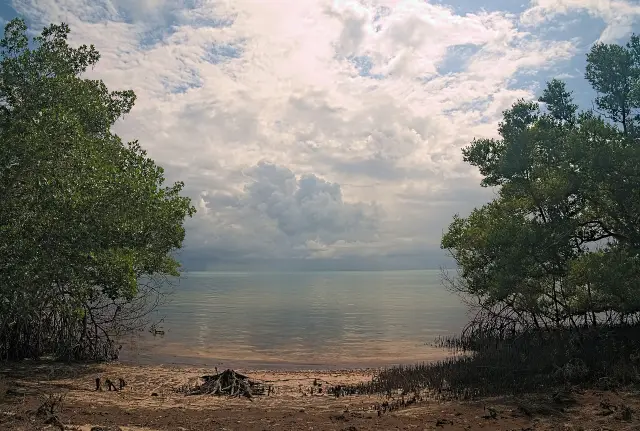
The area those rules reach is defined, not left open. The code's jurisdictional boundary means the area of the beach and land extending landward from the beach along land adjacent to the Atlantic Ocean, and the beach itself runs landward from the mean low-water line to the line of permanent vegetation or a marked change in material (city code Ch. 14, Art. III, Sec. 14-52). The city's public beach accesses along that strip include its street ends and the Ridgewood Avenue Beach Crossover north of Cherie Down Park, and the city calls its beaches public property open year round (city beaches page). No nest count for the city alone appears on the city pages read for this guide.
What lights must Cape Canaveral oceanfront homes and condos turn off?
From May 1 to October 31, any Cape Canaveral building whose lights reach the beach must either meet the code's light limits or switch those lights off from 9:00 p.m. until 7:00 a.m.
In Cape Canaveral, Sec. 14-56 covers existing development. Lighting of all structures which illuminate the beach must conform to the new-construction limits in section 14-55(a), or lights used to illuminate buildings and grounds above those levels shall be turned off from 9:00 p.m. until 7:00 a.m. every day in the season; the section adds that automatic timers may be used to provide consistent compliance (city code Ch. 14, Art. III, Sec. 14-56).
The Cape Canaveral plain-language turtle law page adds examples of what counts. It says beach-facing lights must be turned off, or curtains drawn, in those hours, and warns that even the lights over the stove or from a television can disorient baby turtles, as can outdoor security lights (city turtle law page). For anyone who wants outdoor light in season, the city points to turtle-friendly bulbs or fixtures, which it calls inexpensive and readily available at most local hardware stores.
For Cape Canaveral households choosing fixtures, FWC's lighting guidance spells out what turtle-friendly means: keep fixtures low, use only long wavelength light of 560 nm or greater (amber, orange or red), and keep fixtures shielded and completely downward-directed, with FWC's Certified Wildlife Lighting meeting all three rules (FWC lighting guidelines). FWC also says decorative lights such as uplights and string lights should not be turned on until after nesting season ends, October 31.
What lighting limits apply to new buildings and public lights in Cape Canaveral?
New construction, remodels that change exterior lighting, parking lots and city-owned lights near the Cape Canaveral beach must keep light on the sand below set footcandle limits.
Sec. 14-55 of the Cape Canaveral code sets the numbers. No more than 0.5 footcandles of artificial illumination may be cast upon the beach, or no more than two footcandles when the light falls between 560 and 620 nanometers; no lamp may be directly visible from the beach; parking lots where vehicle headlights may cast light onto the beach must be screened; and photometrics, including horizontal isolux charts, must be filed with building and electrical plans (city code Ch. 14, Art. III, Sec. 14-55). The same section says it does not apply to a structure that had a building permit or development order before the ordinance took effect; Sec. 14-56 is the section on existing development. The code counts remodeling as new development only when the remodel alters exterior lighting (city code Ch. 14, Art. III, Sec. 14-52).
The City of Cape Canaveral holds its own lights to the same standard. Streetlights and lighting at parks and other publicly owned beach access areas must use new and replaced lamps that are not directly visible from the beach, and any of them that light the beach above the limits must be off from 9:00 p.m. until 7:00 a.m. in season (city code Ch. 14, Art. III, Sec. 14-57). The code also defines low-profile lighting as a fixture that puts the light source no higher than 48 inches off the ground with light directed downward from a hooded source (city code Ch. 14, Art. III, Sec. 14-52).
Are beach fires and beach raking allowed in Cape Canaveral during turtle season?
Fires visible from the beach are banned at night in season, cooking on the Cape Canaveral beach is limited to a closed container all year, and mechanical raking stops from May 1 to October 31.
Cape Canaveral's Sec. 14-58 prohibits fires within the article's boundary when they are visible from the beach from 9:00 p.m. until 7:00 a.m. between May 1 and October 31, and prohibits mechanical raking of the beach in the same period except under the storm exemption (city code Ch. 14, Art. III, Sec. 14-58). The code defines mechanical raking as raking with a motor-powered vehicle and a rake with prongs greater than three inches long (city code Ch. 14, Art. III, Sec. 14-52). After a major storm or red tide, raking may happen only where the beach has been part of a turtle monitoring program, a permitted research agency certifies that no identified nest will be disturbed, and the state field permit is on file (city code Ch. 14, Art. III, Sec. 14-54).
The year-round fire rule appears in the Cape Canaveral FAQ. Open, uncontained fires of any kind are prohibited in all city parks, including city beaches, and cooking fires are permitted on city beaches only when confined within a self-contained UL-listed container; coals may not be dumped in trash receptacles or on the sand, and the beach must be returned to its prior condition (city FAQ). Among the Mobi-Mat's advantages, the same FAQ lists resistance to repeated vehicle crossings by county lifeguards, BCSO, PWS staff and sea turtle surveys.
How are turtle lighting violations reported and enforced in Cape Canaveral?
Cape Canaveral Code Enforcement takes turtle lighting complaints at (321) 868-1220 or code@capecanaveral.gov, and the code requires a written warning before a penalty.
The city turtle law page lists that phone and email for sea turtle lighting violations (city turtle law page). FWC's statewide ordinance list shows Cape Canaveral's ordinance as adopted in 1990, codified as Chapter 14, Article III, with the code enforcement contact at (321) 868-1220 x115 (FWC ordinance list). Under Sec. 14-53, the administrator notifies the owner or occupant in writing of the violation and the fix required; a person found guilty after a first written warning is punished under section 1-15, and the article may also be enforced by the special magistrate or code enforcement board or restrained by injunction (city code Ch. 14, Art. III, Sec. 14-53). The administrator is defined as the city manager or a designee (city code Ch. 14, Art. III, Sec. 14-52).
A Cape Canaveral property that needs more light for safety can apply for an administrative exemption in writing, with a site plan showing all buildings and lighting, the exemption requested and the reasons; the administrator weighs effects on the surroundings and public safety, and a denial can be appealed to the city council (city code Ch. 14, Art. III, Sec. 14-54). Research or patrol vehicles operated by state permittees or law enforcement officers are exempt at night with no more light than safe operation needs. Vacation rental hosts carry part of the load: the Vacation Rental Safety and Information Notice each rental must post includes excerpts of the city code on sea turtles and sea turtle lighting, along with noise, dog walking, beach, park and nuisance rules (vacation rental FAQ).
What should someone do on finding a sea turtle or an unmarked nest in Cape Canaveral?
Leave it alone and call the FWC Wildlife Alert line at 1-888-404-3922, the number the City of Cape Canaveral lists for both injured turtles and unmarked nests.
The Cape Canaveral FAQ lists 1-888-404-3922 under report injured or endangered wildlife, 24 hours, and again under report unmarked sea turtle nests (city FAQ). State law backs the hands-off advice. Unless authorized, the Marine Turtle Protection Act forbids anyone to knowingly take, disturb, destroy or harass a marine turtle or hatchling, or a turtle's eggs or nest (s. 379.2431, Florida Statutes). The city's turtle law page names that act and Florida Administrative Code 68E-1 as making it illegal to possess turtle eggs, disrupt nests or disturb the turtles (city turtle law page).
The article's footnote lists state law references on sea turtles, including F.S. 161.053, 161.142 and 370.12 (city code Ch. 14, Art. III). Brevard County's own turtle ordinance, Chapter 46, Article III, is listed separately on the FWC ordinance list, while Cape Canaveral, Cocoa Beach and the other beach cities each list their own chapter (FWC ordinance list).
Last verified: October 21, 2026, through a fresh read of Cape Canaveral Code Secs. 14-51 through 14-58, the city's sea turtle, turtle law, FAQ and vacation rental pages, FWC's ordinance list and lighting guidance, and s. 379.2431.
Frequently asked questions
When is turtle season in Cape Canaveral?
City pages say March 1 to October 31; the lighting, fire and raking rules in the city code run May 1 to October 31.
What time do lights have to be off for sea turtles in Cape Canaveral?
Between May 1 and October 31, beach-facing lights go off, or curtains close, at 9:00 p.m. and stay that way until 7:00 a.m., unless the lighting meets the city's footcandle limits.
Are beach bonfires allowed in Cape Canaveral?
No. The city bans open, uncontained fires on its beaches, allows cooking only in a self-contained UL-listed container, and bans any fire visible from the beach from 9:00 p.m. to 7:00 a.m. between May 1 and October 31.
Where are turtle lighting violations reported in Cape Canaveral?
Cape Canaveral Code Enforcement takes sea turtle lighting complaints at (321) 868-1220 or code@capecanaveral.gov.
What number takes reports of an injured sea turtle or an unmarked nest in Cape Canaveral?
The city FAQ lists the FWC Wildlife Alert line, 1-888-404-3922, for injured or endangered wildlife (24 hours) and for unmarked sea turtle nests.
Sources
- Sea Turtles, City of Cape Canaveral https://capecanaveral.gov/quality_of_life/cape_canaveral_beaches/sea_turtles.php Used for: season March 1 to October 31, three species
- Laws Regarding Sea Turtles, City of Cape Canaveral http://www.capecanaveral.gov/quality_of_life/cape_canaveral_beaches/turtle_laws.php Used for: 9 p.m. to 7 a.m. lights out May 1 to Oct 31, interior lights, Code Enforcement contact
- FAQs, City of Cape Canaveral https://www.capecanaveral.gov/faqs.php Used for: FWC hotline, unmarked nests, beach cooking fires, Mobi-Mats and turtle surveys
- Cape Canaveral Beaches, City of Cape Canaveral https://www.capecanaveral.gov/community/cape_canaveral_beaches/index.php Used for: public beaches year round, Ridgewood Avenue crossover north of Cherie Down Park
- Vacation Rental FAQ, City of Cape Canaveral https://www.capecanaveral.gov/commerce/vacation_rental_faq.php Used for: rental documents include sea turtle lighting excerpts
- Cape Canaveral Code of Ordinances, Chapter 14, Article III Sea Turtles (Municode, opened at Sec. 14-56) https://api.municode.com/CodesContent?jobId=466381&productId=12642&nodeId=SPAGEOR_CH14AN_ARTIIISETU_S14-56EXDE Used for: Secs. 14-51 to 14-58: purpose, definitions, enforcement, exemptions, footcandle limits, 9 to 7 rule, public lighting, fires and raking
- Sea Turtle Protection Ordinances, FWC https://myfwc.com/conservation/you-conserve/lighting/ordinances/ Used for: Cape Canaveral 1990 Chapter 14 Article III
- Sea Turtle Lighting Guidelines, FWC https://myfwc.com/wildlifehabitats/wildlife/sea-turtle/lighting/ Used for: low, long, shielded; certified lighting
- Florida Statutes 379.2431, Marine Turtle Protection Act https://www.flsenate.gov/Laws/Statutes/2025/379.2431 Used for: state prohibitions
Published by Rytas Dirse, Solo Founder & AI Architect
Built with AI, held to quality gates. US sources, US brands, facts only.
How this page was made
Digital Towns uses AI assistance to research and write its guides, and every page is only as good as the sources it cites. Our goal is the most accurate, useful local information possible.
If you see an error, or anything you can show is false, tell us right away and we will take a third look.
Report an error
Thank you. We'll take a third look and correct the page if it's wrong.