Short answer: On Cocoa Beach, glass, fireworks, beach fires and overnight camping are not allowed, shade tents are limited to 10 ft x 10 ft, and dogs may go only to the dog beach from 4th Street South to Robert P. Murkshe Park, on a leash of 10 feet or less at set hours. The city's ordinance index traces alcohol limits to Sections 15-20 and 15-20.1 of the city code, including a 1985 open container ban on public dune crossovers, and Beach Rangers enforce city code on the sand.
Last verified: October 21, 2026, against the sources listed at the end of this page.
What is banned on the sand at Cocoa Beach?
Glass, fireworks, beach fires and overnight camping are all off limits on Cocoa Beach, dogs are confined to one designated stretch, and shade structures are capped at 10 ft x 10 ft (Cocoa Beach Beach Guidelines, Cocoa Beach city FAQs).
| Item | Rule | Source |
|---|---|---|
| Dogs | Only in the designated dog beach area, on a leash no longer than 10 feet, at posted hours | City Beach Guidelines |
| Glass containers | Not allowed on the beach | City Beach Guidelines |
| Fireworks | Prohibited on the beach and in public parks | City FAQ, Fire |
| Beach fires | No permits are being issued while procedures are reevaluated | City FAQ, Fire |
| Overnight camping | Not allowed on the beach | City Beach Guidelines |
| Umbrellas, canopies, shade tents | Allowed up to 10 ft x 10 ft, away from dunes, nest zones and paths, removed before leaving | City Beach Guidelines |
| Surf fishing | Allowed under Florida fishing regulations | City Beach Guidelines |
| Sea oats and sea grapes | Unlawful to cut, harvest, remove or eradicate on public land | Fla. Stat. 161.242 |
The city's Beach Guidelines open with a quick reference table that answers no to beach fires, overnight camping, fireworks, glass and approaching wildlife. The yes answers are short: dogs in the dog beach area, fishing that follows state rules, and surfing after checking conditions and warning flags (Cocoa Beach Beach Guidelines). Leaving the beach the way it was found is part of the guidance too: pack out what comes in, leave shells and sea life in place, fill in holes and keep off the dunes (Cocoa Beach Beach Guidelines).
Shore anglers on Cocoa Beach also fall under state licensing. The Florida Fish and Wildlife Conservation Commission describes a Saltwater Shoreline-Only Fishing License, valid from the shoreline or a structure fixed to shore, that is no-cost for Florida residents; its listed non-resident saltwater licenses cost $17.00 for 3 days, $30.00 for 7 days and $47.00 for a year (FWC saltwater fishing licenses).
Where and when can dogs go on Cocoa Beach?
Dogs are allowed on one marked section of Cocoa Beach sand, from 4th Street South to the north side of Murkshe Park, during morning and late-day windows that shift with daylight saving time (Cocoa Beach Beach Guidelines).
The Pets tab of the city guidelines (which spells the park Murshe, while the city's Beach Access Parks page spells it Murkshe) sets the conditions: a leash of 10 feet or less, waste picked up, dogs kept away from protected wildlife areas and respect for other beachgoers. In standard time the dog beach is open 6 to 10 AM and 4 to 7 PM; in daylight saving time the windows are 6 to 10 AM and 5 to 9 PM (Cocoa Beach Beach Guidelines).
Section 4-20, the dog beach section, dates from 2018, and earlier city ordinances restricted dogs. The city's ordinance index lists a 1949 ordinance against dogs running at large, a 1959 ordinance barring dogs from certain public places, and Ordinance 1620, adopted May 17, 2018, which created Section 4-20, Dogs Permitted on a certain beach with limitations, with enforcement, penalties, signage and public education directions and a six month trial period (Cocoa Beach ordinance index for alcoholic beverages and animals). The same index shows the city adopting Brevard County's Animal Control Ordinance in 1995 through Ordinance 1068 (Cocoa Beach ordinance index for alcoholic beverages and animals), and the city FAQ sends reports of stray dogs and cats to Brevard County Animal Control (Cocoa Beach city FAQs).
Is alcohol allowed on the beach in Cocoa Beach?
Alcohol on the sand falls under the city code's alcoholic beverages in public places rules, amended over the years for the Ocean Beach, dune crossovers and parks (Cocoa Beach ordinance index for alcoholic beverages and animals).
The index lists those rules as Section 15-20.1 in its 1975, 1985 and 2005 amendments and as Section 15-20 in its 2008 and 2010 amendments (Cocoa Beach ordinance index for alcoholic beverages and animals).
The city's Beach Guidelines page does not mention alcohol (Cocoa Beach Beach Guidelines).
The city's ordinance index, last updated February 1, 2019, traces those changes. Ordinance 475 of April 3, 1975 barred drinking or holding an open container on any street, alley, sidewalk or public parking area. Ordinance 801 of September 5, 1985 added public dune crossovers to that list. Ordinance 1407 of May 5, 2005 addressed the size of beverage containers on the Ocean Beach and the locations on the Ocean Beach where possession of alcoholic beverages is not permitted, with penalties and enforcement (Cocoa Beach ordinance index for alcoholic beverages and animals).
Parks have their own entries. Ordinance 1466 of February 7, 2008 added the word Park to Section 15-20 to confirm that alcoholic beverages are prohibited in parks, and Ordinance 1515 of September 2, 2010 authorized alcohol in public areas approved by the City Commission. Ordinance 1546 of May 3, 2012 created a separate alcohol-free zone on Sidney Fischer Park, with a legal description and a graphic of its boundaries (Cocoa Beach ordinance index for alcoholic beverages and animals).
Because the index summarizes ordinances rather than printing the current section, the exact container sizes and beach locations are in the code text itself. The Beach Rangers who patrol the sand enforce city code (Cocoa Beach Police Beach Rangers).
Can fireworks or a bonfire be set off on Cocoa Beach?
No: the city prohibits all fireworks on the beach and in public parks, and it is not issuing beach campfire permits at present (Cocoa Beach city FAQs).
The Fire Department's answers in the city FAQ add the edges of those rules. Fireworks approved by the State Fire Marshal are permitted on private property, but not on the sand or in a park. On campfires, the FAQ says no permits are being issued while the city reevaluates its procedures, and the Beach Guidelines quick list repeats that beach fire permits are currently unavailable (Cocoa Beach city FAQs, Cocoa Beach Beach Guidelines). Outdoor burning of rubbish, trash or debris is prohibited anywhere in the city (Cocoa Beach city FAQs).
Camping is a separate ban. The guidelines describe Cocoa Beach as a day destination and say overnight camping is not allowed on the beach (Cocoa Beach Beach Guidelines). Night lighting is also limited on oceanfront property: Sec. 15-44 of the city code makes it unlawful for oceanfront owners or occupants to let direct lighting illuminate the ocean beach so as to be a hazard to fledgling sea turtles, from dusk to dawn between May 1 and October 31 (Cocoa Beach Sec. 15-44). The Cocoa Beach sea turtle nesting guide covers that lighting rule and the nesting season in detail.
What are the rules for dunes, sea oats and wildlife on Cocoa Beach?
Beachgoers are asked to stay off the dunes and use the designated beach accesses, and Florida law makes it unlawful to cut, harvest, remove or eradicate sea oats or sea grapes from public land (Cocoa Beach Beach Guidelines, Florida Statutes section 161.242).
The city explains the dune rule in terms of storms: the dunes help protect the community during storms and provide wildlife habitat, so walking on dune vegetation is discouraged (Cocoa Beach Beach Guidelines). The state statute gives the same reason, protecting beaches from erosion by preserving the plant cover that binds the sand, and it treats possession of sea oats or sea grapes by anyone other than the landowner as prima facie evidence of a violation (Florida Statutes section 161.242). Trimming beach or dune vegetation needs a field permit from the Florida Department of Environmental Protection, which the city FAQ lists at 321-725-4548, and damage to a public dune crossover goes to Public Works at 321-868-3219 (Cocoa Beach city FAQs).
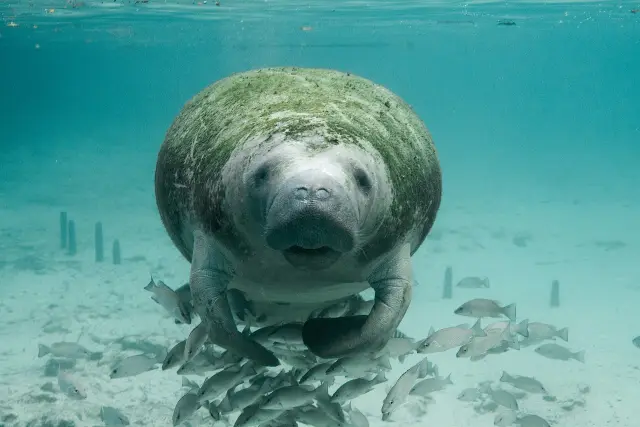
For wildlife, the guidelines ask visitors to watch dolphins, birds and turtles from a distance, never touch or feed them, and keep pets away; a stranded marine animal is reported to the Florida Fish and Wildlife Conservation Commission at 888-404-3922 (Cocoa Beach Beach Guidelines). The city FAQ points nest concerns to the Turtle Preservation Society at 321-676-1701 and says dead dolphins and manatees are reported to the Florida Department of Environmental Protection (Cocoa Beach city FAQs).
Wildlife protection has a long paper trail in Cocoa Beach. The ordinance index shows the city declaring its lands a bird sanctuary in 1962, designating the entire city limits a wildlife sanctuary in 1980, and repealing that sanctuary section and the hunting ban section through Ordinance 1612 on December 7, 2017 (Cocoa Beach ordinance index for alcoholic beverages and animals).
Who enforces the beach rules in Cocoa Beach?
Cocoa Beach Police Department Beach Rangers enforce city code on the sand, while ocean safety belongs to Brevard County Ocean Rescue lifeguards working with the city (Cocoa Beach Police Beach Rangers, Cocoa Beach Beach Safety).
The Beach Ranger program dates from 2012 and was set up to help police with order on crowded beaches. Rangers identify violations of City Code and pursue compliance; nine part-time Rangers cover weekends and holiday Mondays from February through September, and a few work year-round. Their training spans all-terrain vehicles, Code Enforcement, CPR, basic first aid, water rescue and traffic direction (Cocoa Beach Police Beach Rangers).
In the water, the city's Beach Safety page lists full-time lifeguard towers staffed daily from 10 AM to 5 PM at Alan Shepard Park, Lori Wilson Park, Minutemen Causeway and south of the Cocoa Beach Pier, and it explains the flag colors, from green for low hazard to double red, which means the water is closed to the public (Cocoa Beach Beach Safety). The Cocoa Beach surf conditions and rip currents guide covers the flags, rip currents and the National Weather Service forecasts.
Last verified: October 21, 2026, by re-reading the Cocoa Beach Beach Guidelines, Beach Rangers, Beach Safety and city FAQ pages, the city ordinance index for alcoholic beverages and animals, Sec. 15-44, Florida Statutes section 161.242 and the FWC saltwater license page.
Frequently asked questions
Is drinking alcohol allowed on the beach in Cocoa Beach?
The city regulates alcohol on the beach through its alcoholic beverages in public places rules, listed as Sections 15-20 and 15-20.1 in the city's ordinance index, which shows a 2005 amendment on container size and locations on the Ocean Beach. Ordinance 801 of 1985 added public dune crossovers to the open container ban, and Ordinance 1546 of 2012 made part of Sidney Fischer Park an alcohol-free zone.
Are dogs allowed on Cocoa Beach?
Only in the designated dog beach area from 4th Street South to the north side of Robert P. Murkshe Park, on a leash of 10 feet or less. Hours are 6 to 10 AM and 4 to 7 PM in standard time, and 6 to 10 AM and 5 to 9 PM in daylight saving time.
Are bonfires allowed on Cocoa Beach?
No. The city FAQ says no beach campfire permits are being issued while procedures are reevaluated, and fireworks are prohibited on the beach and in public parks.
Are tents allowed on Cocoa Beach?
Umbrellas, canopies and shade tents are allowed up to 10 ft x 10 ft, kept away from dune lines, turtle nest zones and pathways, and taken down before leaving. Overnight camping is not allowed.
Who patrols Cocoa Beach for rule violations?
The Cocoa Beach Police Department Beach Rangers, nine part-time Rangers who patrol weekends and holiday Mondays from February through September, identify City Code violations and pursue compliance. Lifeguards are Brevard County Ocean Rescue.
Sources
- Beach Guidelines, City of Cocoa Beach https://www.cityofcocoabeach.com/192/Beach-Guidelines Used for: can-I list, dogs, canopies, dunes, wildlife
- Beach Rangers, Cocoa Beach Police Department https://www.cityofcocoabeach.com/470/Beach-Rangers Used for: enforcement
- Ordinance index: Alcoholic Beverages, Animals and Fowl, Annexation (updated 2/1/2019) https://cityofcocoabeach.com/DocumentCenter/View/1773/Alcoholic-Beverages-Animals--Fowl-Annexation-PDF?bidId= Used for: alcohol and dog ordinance history
- FAQs, City of Cocoa Beach https://www.cityofcocoabeach.com/faq.aspx Used for: fireworks, campfires, dunes, wildlife contacts
- Beach Safety, City of Cocoa Beach https://cityofcocoabeach.com/193/Beach-Safety Used for: lifeguard towers and flags
- Florida Statutes 161.242 https://www.flsenate.gov/Laws/Statutes/2026/161.242 Used for: sea oats and sea grapes
- FWC Saltwater Fishing Licenses https://myfwc.com/license/recreational/saltwater-fishing/ Used for: license types and prices
- Required Ordinances for Vacation Rental Packets (Sec. 15-44) https://www.cityofcocoabeach.com/DocumentCenter/View/8364/Required-Ordinances-for-Vacation-Rental-Packets Used for: oceanfront lighting
- Beach Access Parks, City of Cocoa Beach https://www.cityofcocoabeach.com/198/Beach-Access-Parks Used for: Robert P. Murkshe Memorial Park spelling (dog beach boundary)
Published by Rytas Dirse, Solo Founder & AI Architect
Built with AI, held to quality gates. US sources, US brands, facts only.
How this page was made
Digital Towns uses AI assistance to research and write its guides, and every page is only as good as the sources it cites. Our goal is the most accurate, useful local information possible.
If you see an error, or anything you can show is false, tell us right away and we will take a third look.
Report an error
Thank you. We'll take a third look and correct the page if it's wrong.