Short answer: February in South Brevard is mild by day, cool at night and the driest month of the year. NOAA NCEI 1991 to 2020 normals give Melbourne International Airport a high of 74.0 degrees, a low of 54.0 and 1.98 inches of rain; the Palm Bay co-op record shows 75.4, 51.5 and 2.42 inches. February 2026 set the airport's all-time February low of 24 degrees on February 2.
Last verified: October 18, 2026, against the sources listed at the end of this page.
How cold is February in Palm Bay and Melbourne?
February is cool at night and pleasant by day in South Brevard: the 1991 to 2020 normals give Melbourne International Airport a high of 74.0 degrees and a low of 54.0, and the Palm Bay co-op record 75.4 over 51.5.
The city's point forecast on forecast.weather.gov shows the latest KMLB observation, labeled Melbourne International Airport (point forecast for Palm Bay). A second NCEI record comes from cooperative station USC00086761 in Palm Bay. In February that co-op site is 2.5 degrees colder at dawn than the airport (54.0 minus 51.5) and 1.4 degrees warmer in the afternoon (75.4 minus 74.0) (NCEI normals, Palm Bay station).
Both records sit in the forecast area of the NWS Melbourne office on Croton Road, whose station digest names West Melbourne, Palm Bay, Indian Harbor Beach and Palm Shores among the communities a short drive from the office and Grant/Valkaria among those a slightly longer commute to the south (NWS Melbourne station digest). Every February figure on this page comes from that office or from NOAA NCEI, and none is a live reading.
| Record | Normal maximum | Normal minimum | Average | Precipitation | Odds of a freeze, % |
|---|---|---|---|---|---|
| KMLB airport, Melbourne | 74.0 | 54.0 | 64.0 | 1.98 | 7.7 |
| Palm Bay co-op, USC00086761 | 75.4 | 51.5 | 63.5 | 2.42 | 25.0 |
| Vero Beach airport, USW00012843 | 75.6 | 54.5 | 65.0 | 2.20 | 11.2 |
February is the month the warm-up begins. The KMLB normal high climbs from 72.4 degrees on February 1 (NCEI day-by-day normals for the airport) to 75.6 on February 28, while its expected morning low warms from 52.0 to 55.9 (same series, February 28). In Palm Bay the gain is similar, from 73.7 and 49.5 on February 1 (Palm Bay day-by-day normals) to 77.0 and 53.2 on February 28 (Palm Bay series, February 28), a rise of 3.3 degrees in the afternoon (77.0 minus 73.7).
In Palm Bay, warm days already outnumber cold nights. NCEI averages 11.1 February days of 80 degrees or more in Palm Bay and 7.8 at the Melbourne airport, against 9.4 and 8.8 mornings of 50 or colder (NCEI February figures for KMLB). For the Micco and Barefoot Bay end of the region, the Indian River County airport at Vero Beach (USW00012843) posts a February normal of 75.6 over 54.5 (NCEI Vero Beach figures).
Ocean water off the Space Coast is near its coldest. Port Canaveral's Trident Pier gauge averages 68.9 degrees in February, and the offshore Canaveral buoy 71.8, its lowest month of the year in the NOAA table (NOAA water temperature table).
Is February the driest month in South Brevard?
February is the driest month of the year at both South Brevard stations, where the 30-year averages are 1.98 inches at the Melbourne airport and 2.42 inches at the Palm Bay co-op site.
Even a dry month varies at KMLB. In the driest quarter of Februaries the Melbourne airport gets under 1.12 inches, and in the wettest quarter over 2.73; rain of 0.10 inch or heavier falls on 3.8 days in a typical February, and an inch-plus day comes 0.6 times (NCEI rainfall figures for KMLB). The Vero Beach airport, south of Micco, averages 2.20 inches.
The 2026 to 2027 dry season could break that pattern. NWS Melbourne issued its dry season forecast on September 30, 2026, with a separate February to April outlook, and the office's headline warns of a raised chance of well above normal rain and severe weather between November 2026 and April 2027 (Central Florida dry season outlook). An update is scheduled for January 2027.
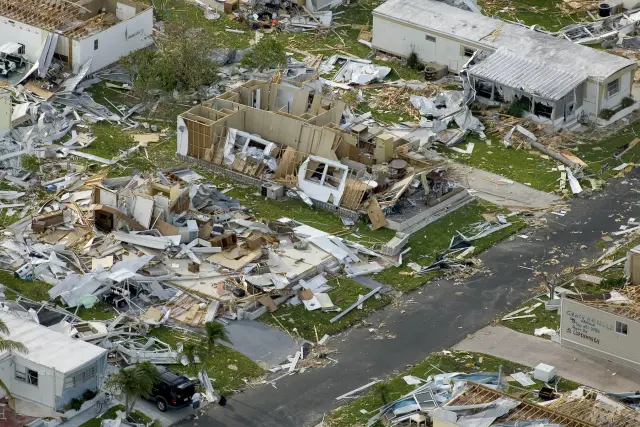
February severe weather has a record in the NWS Melbourne area. On February 5, 1992, a squall line with severe thunderstorm winds and hail crossed Brevard and six other counties in the early morning, with widespread minor property damage (NWS Melbourne February event log). On the night of February 22 to 23, 1998, seven confirmed tornadoes struck within the Melbourne office's warning area in the most devastating tornado outbreak in Florida history, and more than 3,000 structures were damaged (NWS Melbourne February history, 1998).
Strong onshore wind is the other February hazard for the South Brevard beaches east of Malabar and Micco. On February 18, 1994, onshore winds of 30 to 40 mph with gusts to 55 mph caused beach erosion and minor coastal flooding, and the hardest hit coast ran from Brevard to Palm Beach County (NWS Melbourne February history, 1994).
How likely is a February freeze in Palm Bay, Malabar and Grant-Valkaria?
A February freeze is possible but not expected in South Brevard: about one February in four, by the NCEI figure of 25.0 percent, brings a night of 32 degrees or colder to the Palm Bay co-op site, versus 7.7 percent at the Melbourne airport.
Over a full cold season the odds are higher. NCEI rates the odds of any freeze during a whole year at 66.8 percent in Palm Bay (NCEI yearly freeze odds, Palm Bay) and 33.7 percent at KMLB (NCEI yearly freeze odds, KMLB). The 50 percent dates for the last 32 degree night are January 30 in Palm Bay and January 20 at the airport, and the last 36 degree night arrives by February 11 in Palm Bay and January 30 at KMLB, so early February still carries frost risk for gardens in Malabar and Grant-Valkaria.
The average counts are small but not zero. Melbourne International Airport counts 0.2 February nights at or below 32 and 2.6 at or below 40, while the Palm Bay co-op counts 0.3 and 3.8 (NCEI February counts, Palm Bay). With a 25.0 percent chance, three Februaries in four pass with no freeze at the Palm Bay co-op site.
The KMLB February record low is 24 degrees, set on February 2, 2026, and the record high is 92 degrees, set on February 24, 1962, in the KMLB climate report issued March 1, 2026 (KMLB February 2026 climate report). Before 2026, the NWS Melbourne event log recalls the February 4 to 5, 1958 outbreak, when arctic high pressure behind a strong cold front brought record cold to much of Florida and freezing temperatures spread to south Florida (NWS Melbourne February event log, 1958).
What happened in the February 2026 cold snap at Melbourne?
February 2026 opened with record cold at Melbourne International Airport, a daily record low of 25 degrees on February 1 and an all-time February low of 24 on February 2, and the month averaged 60.3 degrees, 3.7 below normal.
NWS Melbourne described an arctic airmass that moved in during the first couple nights of February 2026, causing a couple of hard freezes and setting all-time record low temperatures for the month, with lows in the low to mid 20s (NWS Melbourne February 2026 summary). At Melbourne the 24 degree reading of February 2 replaced a daily record of 33 set in 1980 and became the all-time February low for the site; February 1 brought a 25 degree low and a cool high of only 47 (NWS Melbourne February 2026 records).
| KMLB item | 2026 | 30-year average | 2025 |
|---|---|---|---|
| Mean daily maximum, F | 72.1 | 74.0 | 77.5 |
| Mean daily minimum, F | 48.5 | 54.0 | 60.2 |
| Monthly mean, F | 60.3 | 64.0 | 68.9 |
| Days with at least 0.10 inch | 5 | 3.8 | 5 |
| Heating demand, degree days | 180 | 103 | 27 |
The swing between the two Februaries at KMLB was large: the 2026 average low of 48.5 ran 11.7 degrees below the 60.2 of February 2025 (60.2 minus 48.5), and heating degree days rose from 27 to 180 (KMLB February 2026 report). The month was not cold throughout. Melbourne reached 86 degrees on February 20, tying the daily record, and the strongest gust, 49 mph from the west, came on February 22.
South of Barefoot Bay, Vero Beach averaged 60.5 degrees for February 2026, 4.5 below normal, its 14th coldest February (NWS Melbourne February 2026 rankings). Rain was close to normal at Melbourne, 2.06 inches against 1.98, while Vero Beach measured 2.88 inches against 2.20 (NWS Melbourne February 2026 rainfall), helped by a daily record of 1.53 inches on February 28 (NWS Melbourne February 2026 rainfall records).
Frequently asked questions
What is the coldest temperature ever recorded at Melbourne in February?
The February record at Melbourne International Airport is 24 degrees, set on February 2, 2026, during an arctic outbreak that also produced a 25 degree low the morning before. It replaced a daily record of 33 degrees from 1980.
How often does Palm Bay freeze in February?
NOAA NCEI gives the Palm Bay cooperative station a 25.0 percent chance of at least one 32 degree night in February and averages 0.3 such nights. At Melbourne International Airport the February chance is 7.7 percent.
Is February a good month for dry weather in Micco and Barefoot Bay?
February is the driest month at both South Brevard stations, 1.98 inches at the airport and 2.42 in Palm Bay. The Vero Beach station south of Barefoot Bay averages 2.20 inches, though NWS Melbourne flagged well above normal rain potential for the 2026 to 2027 dry season.
How warm does it get in February in Melbourne?
The KMLB normal high rises from 72.4 degrees on February 1 to 75.6 by February 28, and the airport averages 7.8 February days at 80 or warmer. The February record high is 92 degrees, set on February 24, 1962.
Sources
- NOAA NCEI 1991-2020 monthly normals, Melbourne International Airport (USW00012838) https://www.ncei.noaa.gov/access/services/data/v1?dataset=normals-monthly-1991-2020&stations=USW00012838&format=json&dataTypes=MLY-TAVG-NORMAL,MLY-TMAX-NORMAL,MLY-TMIN-NORMAL,MLY-PRCP-NORMAL,MLY-TMAX-AVGNDS-GRTH090,MLY-TMAX-AVGNDS-GRTH080,MLY-TMIN-AVGNDS-LSTH050,MLY-TMIN-AVGNDS-LSTH040,MLY-TMIN-AVGNDS-LSTH032,MLY-PRCP-AVGNDS-GE010HI,MLY-PRCP-AVGNDS-GE100HI,MLY-PRCP-25PCTL,MLY-PRCP-75PCTL,MLY-TMIN-PRBOCC-LSTH032,MLY-TMIN-PRBOCC-LSTH040 Used for: February normals, cold-night counts, freeze probability, rainfall percentiles at KMLB
- NOAA NCEI 1991-2020 monthly normals, Palm Bay cooperative station (USC00086761) https://www.ncei.noaa.gov/access/services/data/v1?dataset=normals-monthly-1991-2020&stations=USC00086761&format=json&dataTypes=MLY-TAVG-NORMAL,MLY-TMAX-NORMAL,MLY-TMIN-NORMAL,MLY-PRCP-NORMAL,MLY-TMAX-AVGNDS-GRTH090,MLY-TMAX-AVGNDS-GRTH080,MLY-TMIN-AVGNDS-LSTH050,MLY-TMIN-AVGNDS-LSTH040,MLY-TMIN-AVGNDS-LSTH032,MLY-PRCP-AVGNDS-GE010HI,MLY-PRCP-AVGNDS-GE100HI,MLY-PRCP-25PCTL,MLY-PRCP-75PCTL,MLY-TMIN-PRBOCC-LSTH032,MLY-TMIN-PRBOCC-LSTH040 Used for: February normals and freeze probability in Palm Bay
- NOAA NCEI 1991-2020 monthly normals, Vero Beach Regional Airport (USW00012843) https://www.ncei.noaa.gov/access/services/data/v1?dataset=normals-monthly-1991-2020&stations=USW00012843&format=json&dataTypes=MLY-TAVG-NORMAL,MLY-TMAX-NORMAL,MLY-TMIN-NORMAL,MLY-PRCP-NORMAL,MLY-TMIN-PRBOCC-LSTH032 Used for: February reference normals for the Micco and Barefoot Bay end
- NOAA NCEI 1991-2020 annual and seasonal normals, Melbourne International Airport (freeze dates) https://www.ncei.noaa.gov/access/services/data/v1?dataset=normals-annualseasonal-1991-2020&stations=USW00012838&format=json&dataTypes=ANN-TMIN-PRBFST-T32FP50,ANN-TMIN-PRBLST-T32FP50,ANN-TMIN-PRBFST-T36FP50,ANN-TMIN-PRBLST-T36FP50,ANN-TMIN-PRBOCC-LSTH032,DJF-PRCP-NORMAL,DJF-TAVG-NORMAL,JJA-PRCP-NORMAL,JJA-TAVG-NORMAL Used for: yearly freeze probability and last freeze dates at KMLB
- NOAA NCEI 1991-2020 annual and seasonal normals, Palm Bay cooperative station (freeze dates) https://www.ncei.noaa.gov/access/services/data/v1?dataset=normals-annualseasonal-1991-2020&stations=USC00086761&format=json&dataTypes=ANN-TMIN-PRBFST-T32FP50,ANN-TMIN-PRBLST-T32FP50,ANN-TMIN-PRBFST-T36FP50,ANN-TMIN-PRBLST-T36FP50,ANN-TMIN-PRBOCC-LSTH032,DJF-PRCP-NORMAL,DJF-TAVG-NORMAL,JJA-PRCP-NORMAL,JJA-TAVG-NORMAL Used for: yearly freeze probability and last freeze dates in Palm Bay
- NOAA NCEI 1991-2020 daily normals, KMLB, February 1 https://www.ncei.noaa.gov/access/services/data/v1?dataset=normals-daily-1991-2020&stations=USW00012838&startDate=2010-02-01&endDate=2010-02-28&format=csv&dataTypes=DLY-TMAX-NORMAL,DLY-TMIN-NORMAL#row=2 Used for: February 1 normal high and low at KMLB
- NOAA NCEI 1991-2020 daily normals, KMLB, February 28 https://www.ncei.noaa.gov/access/services/data/v1?dataset=normals-daily-1991-2020&stations=USW00012838&startDate=2010-02-01&endDate=2010-02-28&format=csv&dataTypes=DLY-TMAX-NORMAL,DLY-TMIN-NORMAL#row=29 Used for: February 28 normal high and low at KMLB
- NOAA NCEI 1991-2020 daily normals, Palm Bay station, February 1 https://www.ncei.noaa.gov/access/services/data/v1?dataset=normals-daily-1991-2020&stations=USC00086761&startDate=2010-02-01&endDate=2010-02-28&format=csv&dataTypes=DLY-TMAX-NORMAL,DLY-TMIN-NORMAL#row=2 Used for: February 1 normal high and low in Palm Bay
- NOAA NCEI 1991-2020 daily normals, Palm Bay station, February 28 https://www.ncei.noaa.gov/access/services/data/v1?dataset=normals-daily-1991-2020&stations=USC00086761&startDate=2010-02-01&endDate=2010-02-28&format=csv&dataTypes=DLY-TMAX-NORMAL,DLY-TMIN-NORMAL#row=29 Used for: February 28 normal high and low in Palm Bay
- National Weather Service point forecast, Palm Bay FL https://forecast.weather.gov/MapClick.php?lat=27.9931&lon=-80.6608 Used for: Palm Bay forecast uses Melbourne International Airport (KMLB)
- NWS Melbourne climate report for the month of February 2026, Melbourne (CLMMLB, issued March 1, 2026; Iowa Environmental Mesonet NWS text archive) https://mesonet.agron.iastate.edu/cgi-bin/afos/retrieve.py?pil=CLMMLB&sdate=2026-03-01&edate=2026-03-03&fmt=text&limit=1 Used for: February records and February 2026 observations at KMLB
- NWS Melbourne, February 2026 and Winter 2025-2026 Weather Summary, page 2 https://www.weather.gov/media/mlb/summary/FebWinter2026.pdf#page=2 Used for: arctic airmass and record lows, early February 2026
- NWS Melbourne, February 2026 and Winter 2025-2026 Weather Summary, page 3 https://www.weather.gov/media/mlb/summary/FebWinter2026.pdf#page=3 Used for: Melbourne and Vero Beach February 2026 averages and ranking
- NWS Melbourne, February 2026 and Winter 2025-2026 Weather Summary, page 5 https://www.weather.gov/media/mlb/summary/FebWinter2026.pdf#page=5 Used for: Melbourne and Vero Beach daily records February 2026
- NWS Melbourne, February 2026 and Winter 2025-2026 Weather Summary, page 8 https://www.weather.gov/media/mlb/summary/FebWinter2026.pdf#page=8 Used for: February 2026 rainfall at Melbourne and Vero Beach
- NWS Melbourne, February 2026 and Winter 2025-2026 Weather Summary, page 9 https://www.weather.gov/media/mlb/summary/FebWinter2026.pdf#page=9 Used for: Vero Beach daily rainfall record February 28, 2026
- NWS Melbourne, Florida Hazardous Weather Events in February, page 2 https://www.weather.gov/media/mlb/whirl/FloridaHazardousWeather_Feb.pdf#page=2 Used for: 1958 cold outbreak; 1992 squall line in Brevard
- NWS Melbourne, Florida Hazardous Weather Events in February, page 4 https://www.weather.gov/media/mlb/whirl/FloridaHazardousWeather_Feb.pdf#page=4 Used for: 1994 onshore winds and beach erosion from Brevard south
- NWS Melbourne, Florida Hazardous Weather Events in February, page 5 https://www.weather.gov/media/mlb/whirl/FloridaHazardousWeather_Feb.pdf#page=5 Used for: February 22-23, 1998 tornado outbreak in the NWS Melbourne warning area
- NWS Melbourne Dry Season Forecast, 2026-2027 https://www.weather.gov/mlb/mlbnino Used for: February to April outlook period, issued September 30, 2026
- NWS Melbourne Station Digest https://www.weather.gov/mlb/station_digest Used for: communities near the Melbourne forecast office
- NOAA NCEI Coastal Water Temperature Guide, all stations table https://www.ncei.noaa.gov/access/coastal-water-temperature-guide/all_table.html Used for: February water temperatures at Trident Pier and the Canaveral buoy
How this page was made
Digital Towns uses AI assistance to research and write its guides, and every page is only as good as the sources it cites. Our goal is the most accurate, useful local information possible.
This page was fact-checked twice before publishing.
If you see an error, or anything you can show is false, tell us right away and we will take a third look.
Report an error
Thank you. We'll take a third look and correct the page if it's wrong.