Short answer: The St. Lucie County Mosquito Control District, set up in 1926, covers 301 square miles including Fort Pierce and Port St. Lucie. Residents call 772-462-1692 for a free on-site inspection, and the fogging hotline at 772-462-1800 covers spraying. The district also keeps lagoon impoundments flooded through the summer, a method its impoundment page says does not require pesticides. Last verified: October 22, 2026, by rereading the district's overview, inspection, impoundment, beekeeper and performance pages and the Property Appraiser millage table.
Last verified: October 22, 2026, against the sources listed at the end of this page.
What does the St. Lucie County Mosquito Control District do?
The St. Lucie County Mosquito Control District controls mosquitoes and other biting insects across 301 square miles of the county, inside and outside the cities.
The district's overview page says it was established in 1926 as a dependent taxing district and that its area includes both the City of Ft. Pierce and Port St. Lucie. Oversight comes from two places: the district's own board, made up of the five County Commissioners, and the Bureau of Entomology and Pest Control in the Florida Department of Agriculture and Consumer Services. The work is split among three divisions: Administration, Inspection and Impoundment Operations.
The St. Lucie County department home page states the mission as controlling mosquitoes and other arthropods of public health importance through a mix of Ecosystem Management and Integrated Mosquito Management. The overview page describes Integrated Mosquito Management as using every available method, alone or together, and says it does not emphasize mosquito elimination or eradication. For larvae and pupae the page lists biological controls such as native, noninvasive predators, source reduction through water or vegetation management, water sanitation and EPA registered larvicides; EPA registered adulticides may be needed when source elimination or larval control is not feasible or is clearly inadequate.
State law sets the frame for districts like St. Lucie County's. Section 388.021, Florida Statutes declares the abatement of arthropods, whether disease bearing or merely pestiferous, a public purpose, and lets a county or part of one become a special taxing district for arthropod control. It adds that districts created before July 1, 1980, through the old petition process may keep operating, while on and after that date no district may be created except under section 125.01.
How do residents report mosquitoes or ask for an inspection?
A mosquito problem in St. Lucie County is reported by phone to the district office at 772-462-1692, which the homeowners page lists for reporting a problem and requesting an inspection.
| Need | Where to go | Source |
|---|---|---|
| Report mosquitoes, request an inspection | 772-462-1692 | Homeowners page |
| Check whether an area is set for spraying | Fogging Information Hotline, 772-462-1800 | Department home page |
| See scheduled fogging areas on a map | Interactive Mosquito Fogging Map, linked from the department page | Department home page |
| Visit or write to the district | 3150 Will Fee Road, Fort Pierce, FL 34982 | Department home page |
| Tell the district about beehives | 772-462-1692 | Beekeeper page |
The Inspection Division page says the district offers free on-site inspections to give suggestions and can schedule treatment if it is determined to be necessary. Before any chemical treatment, inspectors measure adult mosquito numbers through service requests, trap collection data or landing rate counts, which the page says both state and federal regulations require.
The district also asks St. Lucie County residents to cut breeding water at home. Its homeowners page recommends dumping anything that holds water twice per week if it has rained, emptying the saucers under flower pots, not leaving water in pet bowls for more than two days, drilling drain holes in the bottom of outdoor garbage or recycling bins rather than the sides, keeping pools cleaned and chlorinated even when not in use, regrading spots where puddles remain four or more days, and aerating ornamental ponds or stocking them with mosquito eating fish. The Inspection Division adds a note on bromeliads, which it says should be rinsed out regularly with a garden hose.
When does the district spray, and what about beehives?
Truck fogging for adult mosquitoes in St. Lucie County takes place after sunset and before sunrise, according to the district's beekeeper information page.
The page explains the timing used in St. Lucie County: bees and other pollinators are most active in daylight and return to their hives before sunset, while the district's surveillance shows mosquitoes most active at dawn and dusk. The trucks apply products at ultra low volume (ULV), and the page says those products break down quickly and do not remain in the air or stick to surfaces.
Beekeepers in St. Lucie County can call the district at 772-462-1692; staff will verify the hive location, discuss placement and work with the keeper to safeguard the hives. The same page reminds readers that every beekeeper in Florida must register hives with the Florida Department of Agriculture and Consumer Services.
For the day to day question of whether a Fort Pierce or Port St. Lucie street is on the list, the district points to the fogging hotline at 772-462-1800 and the interactive fogging map on its department page.
What are the mosquito impoundments along the Indian River Lagoon?
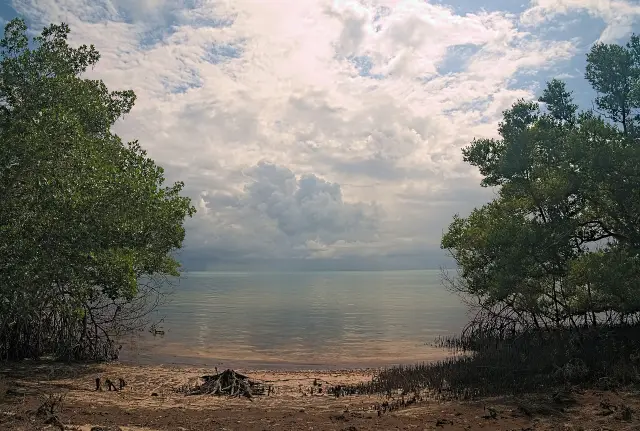
The St. Lucie County impoundments are coastal mangrove swamps and salt marshes along the Indian River Lagoon that the district floods in summer so salt marsh mosquitoes and sandflies have little exposed mud to lay eggs on.
Two county pages give different sizes for this program. The Impoundment Division page says the District manages 4,000 acres of coastal mangrove swamps and salt marshes, while the performance measures page lists managing 4,400 acres of mosquito impoundments along the Indian River Lagoon.
The St. Lucie County method is called rotational impoundment management (RIM). Under it, the impoundments are left open to the natural tides for most of the year, then held flooded through the summer breeding season while partly closed and still exchanging water. The Impoundment Division page calls it insect control by resource management that does not require pesticides, and says the approach benefits fish and wading birds and opens the sites to hiking, biking, fishing, crabbing and wildlife watching.
Buying the land has been part of the program. The same page credits the district's land acquisition, mitigation and donation effort with helping acquire sites that include Wildcat Cove, Vitolo Family Park, Harbor Branch Preserve, Queens and Kings Islands and Bear Point Sanctuary, with acquisition and restoration paid for through Preservation 2000 and federal grant programs such as Florida Communities Trust and Conservation and Recreation Lands. The Bear Point Sanctuary page describes a 13-acre preserve at 2601 S. Ocean Drive, a mangrove-lined impoundment beside the lagoon, managed by the Mosquito Control District. The county conservation lands guide covers visiting these preserves.
What is the Bear Point Mitigation Bank?
The Bear Point Mitigation Bank is a 317-acre mangrove saltwater marsh on County-owned wetlands beside the Indian River Lagoon near Fort Pierce that sells mangrove forested credits, and it has operated since 2003.
Its county page gives the address as 2601 S Ocean Dr, Fort Pierce, FL 34949, and says the bank is managed by St. Lucie County and the Mosquito Control District and permitted by the Florida Department of Environmental Protection and the U.S. Army Corps of Engineers. Its primary service area runs along the barrier islands and mainland Indian River waterfront from the Sebastian Inlet to the St. Lucie Inlet; the page adds that, as of summer 2019, the state allows credits to be bought in some cases for impacts outside that area.
| Credit type | Purchase price | Reservation price |
|---|---|---|
| Dual credits | $45,000.00 per tenth of a credit | $11,250.00 per tenth of a credit |
| Federal or State credits | $22,500.00 per tenth of a credit | $5,625.00 per tenth of a credit |
The page says the purchase price is based on the annual appraised value of each credit, $225,000.00, and that the reservation price is 25% of the total cost. A buyer starts with an email request naming the number of credits (sold in tenths only), purchase or reservation, the credit type and the project name; the County Attorney's Office then prepares the agreement, which goes to the Board of County Commissioners or the County Administrator for approval.
The Impoundment Division page adds the engineering. The bank sits in Mosquito Control District Impoundment 1, about 1.3 miles south of Ft. Pierce Inlet, and was permitted for 49.8 estuarine mangrove credits from the state and 43.3 credits from the Corps. The plan added twenty-four 36-inch culverts through the levee; during the flooded period, May to September, about 49,000 gallons per minute are pumped into the impoundment, and the target water exchange is 80% of what would move naturally without the levee.
How does the district measure mosquito numbers and set its goals?
The St. Lucie County district counts mosquitoes with traps, landing rate counts and sentinel chicken flocks, and its performance measures page lists yearly targets for each.
As a dependent special taxing district, the page says, the district aligns with the Board of County Commissioners' strategic plan. Its listed surveillance targets include setting and collecting 7 CDC light traps weekly (350 annually), 34 BG counters five days a week (8500 annually), a minimum of 3200 landing rate counts each year, and weekly blood samples from 7 coops of 6 sentinel chickens, submitted to the state for testing. Outreach targets include 7 outreach events, among them gambusia (mosquito fish) giveaways twice a year and an annual tire round up.
The same page names infrastructure needs the Mosquito Control District has set for itself: repairs to impoundment pump stations, including the Impoundment 9 pump station, repair or replacement of the fog truck carport, and more lab equipment and staff, either by extending the inspection building or by buying a modular lab until a facility master plan can be completed.
In 2026 the district commemorates 100 years of organized mosquito control. Its 100 years page says the district was established only months after the formation of Florida's first mosquito control district in neighboring Indian River County, and it hosts a historical archive of photographs, clippings and documents from the 1920s onward.
How is mosquito control paid for in St. Lucie County?
Mosquito Control is listed as its own taxing authority in the Property Appraiser's taxing authority rates table, which lists Mosquito Control at 0.1352 mills as the 2025 final rate.
| Rate | Mills |
|---|---|
| 2025 final millage rate | 0.1352 |
| 2026 rollback millage rate | 0.1289 |
| 2026 proposed millage rate | 0.1352 |
The same table gives the public hearing contact for Mosquito Control as 2300 Virginia Ave, 3rd Floor, Fort Pierce, 772-462-1670. The county budget and millage guide places this rate beside the other county levies.
Frequently asked questions
What is the phone number for St. Lucie County Mosquito Control?
The district office answers at 772-462-1692 for reports and inspection requests. A separate Fogging Information Hotline, 772-462-1800, covers spraying questions. The office is at 3150 Will Fee Road in Fort Pierce.
Does St. Lucie County Mosquito Control cover Port St. Lucie and Fort Pierce?
Yes. The district overview says its 301 square miles include both the City of Ft. Pierce and Port St. Lucie.
Is a mosquito inspection free in St. Lucie County?
The district's Inspection Division says it offers free on-site inspections, gives suggestions, and schedules treatment if it is determined to be necessary.
What time of day does St. Lucie County fog for mosquitoes?
The beekeeper information page says ULV fog trucks apply adult mosquito treatments after sunset and before sunrise, when bees are back in their hives.
Who runs the St. Lucie County Mosquito Control District?
The five County Commissioners serve as the District Board, and the Florida Department of Agriculture and Consumer Services Bureau of Entomology and Pest Control also oversees the district.
Sources
- St. Lucie County Mosquito Control District, department home https://www.stlucieco.gov/departments-and-services/mosquito-control Used for: mission, fogging map, fogging hotline, office phone and address
- St. Lucie County, Mosquito Control District overview https://www.stlucieco.gov/departments-and-services/mosquito-control/mosquito-control-district Used for: 1926 establishment, dependent taxing district, 301 square miles, board, state oversight, divisions, integrated mosquito management
- St. Lucie County Mosquito Control, Inspection Division https://www.stlucieco.gov/departments-and-services/mosquito-control/inspection-division Used for: surveillance methods, ten prevention tips, free on-site inspections
- St. Lucie County Mosquito Control, Impoundment Division https://www.stlucieco.gov/departments-and-services/mosquito-control/impoundment-division Used for: 4,000 acres of impoundments, rotational impoundment management, land acquisitions, Bear Point bank permits and pumping
- St. Lucie County, Bear Point Mitigation Bank https://www.stlucieco.gov/departments-and-services/mosquito-control/bear-point-mitigation-bank Used for: 317 acres since 2003, service area, credit types and posted prices
- St. Lucie County Mosquito Control, Homeowners Information https://www.stlucieco.gov/departments-and-services/mosquito-control/homeowners-information Used for: how to report a problem, yard tips
- St. Lucie County Mosquito Control, Beekeeper Information https://www.stlucieco.gov/departments-and-services/mosquito-control/beekeeper-information Used for: ULV fogging after sunset and before sunrise, beekeeper notice, FDACS hive registration
- St. Lucie County Mosquito Control, Performance Measures https://www.stlucieco.gov/departments-and-services/mosquito-control/mosquito-control-performance-measures Used for: strategic plan alignment, outreach targets, surveillance counts, 4,400 acres of impoundments
- St. Lucie County, 100 Years of Mosquito Control https://www.stlucieco.gov/departments-and-services/mosquito-control/100-years-of-mosquito-control Used for: centennial in 2026, historical archive from the 1920s
- Florida Statutes, section 388.021 (2025) https://www.flsenate.gov/Laws/Statutes/2025/388.021 Used for: creation of mosquito control special districts
- St. Lucie County, Bear Point Sanctuary preserve page https://www.stlucieco.gov/departments-and-services/environmental-resources/county-preserves/bear-point-sanctuary Used for: Mosquito Control District manages the 13-acre impoundment
- Property Appraiser of St. Lucie County, Taxing Authority Rates and Hearing Information https://www.paslc.gov/249/Taxing-Authority-Rates-Hearing-Informati Used for: Mosquito Control millage: 2025 final, 2026 rollback and 2026 proposed
Published by Rytas Dirse, Solo Founder & AI Architect
Built with AI, held to quality gates. US sources, US brands, facts only.
How this page was made
Digital Towns uses AI assistance to research and write its guides, and every page is only as good as the sources it cites. Our goal is the most accurate, useful local information possible.
If you see an error, or anything you can show is false, tell us right away and we will take a third look.
Report an error
Thank you. We'll take a third look and correct the page if it's wrong.