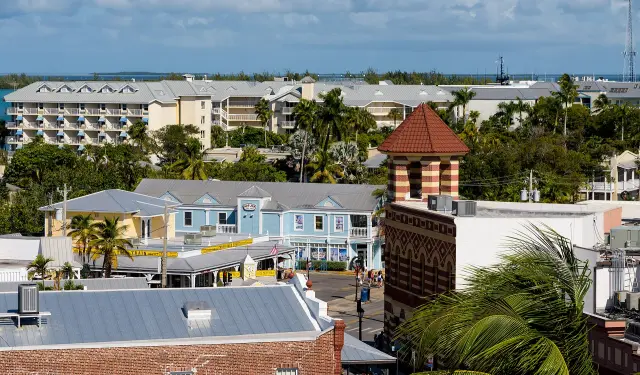
Short answer: Cocoa is a Brevard County city of 19,554 people (ACS 2020-2024) on the Indian River, reached by SR 520, SR 528 and U.S. 1. A five-member council and a city manager run it from City Hall at 65 Stone Street (321-433-8800). Historic Cocoa Village is the downtown, a federal award of approximately $57.5 million funds a planned Brightline station, and FEMA rates Cocoa CRS class 9.
Last verified: October 21, 2026, against the sources listed at the end of this page.
Where is Cocoa, Florida, and how do people get there?
Cocoa sits on the Indian River in central Brevard County, and the city lists State Roads 520, 528 and 524 and U.S. 1 as its main roads in.
The City of Cocoa describes itself as one of the oldest cities along the Indian River and as the gateway to Cocoa Beach and the other beach-side communities, reached by State Roads 520, 528 and 524 as well as U.S. 1 (Discover Cocoa). The same page says Interstate 95 (north and south) and State Road 528 (east and west) serve Cocoa, and it puts Cocoa 30 minutes from Orlando International Airport and minutes from Port Canaveral.
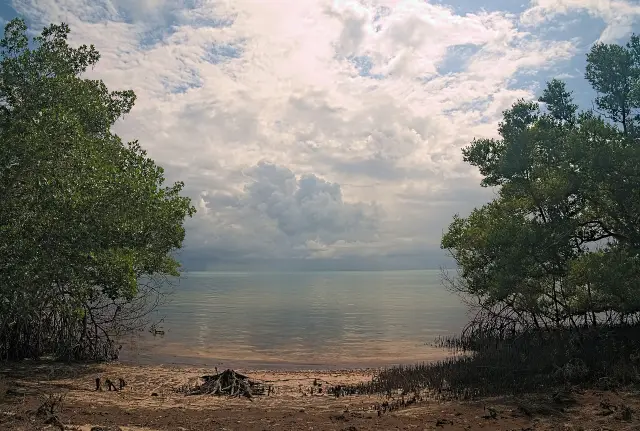
The Census Bureau's 2024 place gazetteer lists Cocoa city at 13.706 square miles of land and 1.021 square miles of water (2024 Census gazetteer, Florida places). The river edge is public in the middle of town: Riverfront Park at 401 Riveredge Blvd., together with Lee Wenner and Taylor Parks, gives permanent public access to nearly 10 acres of riverfront land in downtown Cocoa (City of Cocoa Riverfront Park page).
Cocoa City Hall is at 65 Stone Street, main phone 321-433-8800, and its hours are Monday to Friday, 8 a.m. to 5 p.m., excluding holidays (City of Cocoa FAQs). The utility counter in the same building keeps shorter in-person hours, 8:00 a.m. to 12:30 p.m. and 2:00 p.m. to 4:30 p.m. (City of Cocoa site footer on the same FAQ page).
How did Cocoa get its name, and when did it become a city?
Cocoa was settled by about 1860, carried the name Cocoa by 1884 and was incorporated in 1895, according to the City of Cocoa history page.
The city's account of its own past starts with fishermen. The first families arrived around 1860, the first commercial building went up in 1881 or 1882, and the first plats in 1882 used the name Indian River City, which postal authorities refused as too long for a postmark (City of Cocoa history and culture page). The page records three stories for the name Cocoa, including a box of Baker's Cocoa, and concludes that, whatever its origin, by 1884 the name Cocoa had become permanently associated with the settlement.
Cocoa's early years were hard. A fire destroyed the business district in 1890; the Jacksonville, St. Augustine and Indian River Railway reached Cocoa in the early 1890s and drove growth; and the Great Freeze of 1894 and 1895 destroyed the citrus crop. Citing earlier sources, the same Cocoa history page gives a population of 382 by 1903 and an estimate of 1,800 by 1925; from 1929 the local economy declined and the two local banks failed, yet the population rose to 2,200 by 1930.
The space program changed the scale of the place. Cocoa's population quadrupled from 3,098 in 1940 to 12,244 in 1960, visitors came to watch launches from Cape Canaveral, and the count reached 16,096 by 1980 (City of Cocoa history). The Historic Cocoa Village guide in the Cocoa places section goes further on the Village and its landmarks.
How many people live in Cocoa, and what does the Census say about them?
The Census Bureau's ACS 2020-2024 5-year estimates count 19,554 people in Cocoa, with a median age of 44.9 (ACS 2024 DP05 for Cocoa city).
In the same ACS release, 21.8 percent of Cocoa residents were 65 or older. Median household income was $63,105, and Cocoa workers averaged a 25.6 minute trip to work (ACS 2024 DP03 for Cocoa city).
On housing, the ACS counts 10,230 housing units in Cocoa, 8,531 of them occupied; owners held 63.5 percent of the occupied homes, the median owner-occupied value was $246,100 and median gross rent was $1,274 a month (ACS 2024 DP04 for Cocoa city).
| Measure | Cocoa estimate | ACS table |
|---|---|---|
| Population | 19,554 | DP05 |
| Median age | 44.9 | DP05 |
| Residents 65 and older | 21.8 percent | DP05 |
| Median household income | $63,105 | DP03 |
| Mean travel time to work | 25.6 minutes | DP03 |
| Housing units | 10,230 (8,531 occupied) | DP04 |
| Owner-occupied homes | 63.5 percent | DP04 |
| Median home value (owner occupied) | $246,100 | DP04 |
| Median gross rent | $1,274 | DP04 |
One older figure still circulates on the city site. The Cocoa history page quotes the 2000 Census count of 16,412 residents (City of Cocoa history); the ACS 2020-2024 estimate above is the more recent federal figure, so a reader comparing Cocoa numbers should check which survey year each one comes from.
How is the City of Cocoa governed, and where does the council meet?
Cocoa runs on a council-manager plan first approved in 1959: a five-member city council sets policy and a city manager serves as chief executive.
The Cocoa City Council works as the city's board of directors, with the mayor as chairman; the mayor is elected at large and the four other members are each elected by a district (City of Cocoa City Council page). Regular meetings are held at 6:00 p.m. on the second and fourth Tuesday of each month in the Council Chambers at 65 Stone St. The council appropriates money for each department, while day-to-day supervision belongs to the city manager. Last verified: October 21, 2026, against the City of Cocoa council, history, utility and police pages, the Census ACS 2020-2024 tables and the FEMA community status record for Cocoa.
Several Cocoa services come straight from the city. Properties inside Cocoa city limits get trash pickup twice a week from Waste Management under a city contract, with yard waste on Wednesdays and yard waste piles on Thursdays (City of Cocoa FAQs). The Cocoa Police Department is at 1226 West King Street, open Monday through Friday 8 a.m. to 5 p.m., with a non-emergency line at 321-639-7620 and 911 for emergencies (Cocoa Police Department).
Cocoa Water reaches well beyond the city. The City of Cocoa's drinking water utility serves more than 85,000 accounts in Brevard County, from Cocoa Beach, Cape Canaveral and Rockledge to Merritt Island, Viera, Suntree and Port St. John, and its service area covers roughly a third of the county (City of Cocoa water treatment page). The treatment plants are the 48 million gallon per day Wewahootee pretreatment facility, the 60 mgd Dyal groundwater plant and the 12 mgd Dyal surface water plant; Water Customer Service and main-break reports share one number, (321) 433-8400. Countywide services are covered in the Brevard County section.
What is there to do in Cocoa?
Historic Cocoa Village, the city's downtown, is home to the Historic Cocoa Village Playhouse, the Florida Historical Society headquarters, and Cocoa Riverfront Park sits within the Village.
The City of Cocoa says the Playhouse attracts nearly 30,000 visitors a year, and that downtown Cocoa Village and Cocoa Riverfront Park hosted more than 65 special events with over 135,500 visitors in the most recent year it reports (Discover Cocoa). The 4th of July event that the city and partner organizations host drew a record 12,000 spectators in one night, and Halloween in the Village, art and craft fairs, Mardi Gras and amphitheater concerts fill the rest of the calendar. Several hundred cruise passengers also arrive in the Village by bus each week. Porcher House and Derby Street Chapel are the landmark buildings the city names in the Village.
Riverfront Park is open dawn to dusk except during reserved events, with an amphitheater facing the Indian River, a boardwalk, covered pavilions and spots for fishing and boat launching (City of Cocoa Riverfront Park page). Its reservations office is inside Porcher House, Suite 202, open Monday to Friday. Cocoa Leisure Services, created in 2005, runs Porcher House, the Civic Center, the Riverfront Park amphitheater and fountain, Taylor Park and Myrt Tharpe Square, and handles park permits and special event applications from 430 Delannoy Avenue, (321) 639-3500 (City of Cocoa Leisure Services).
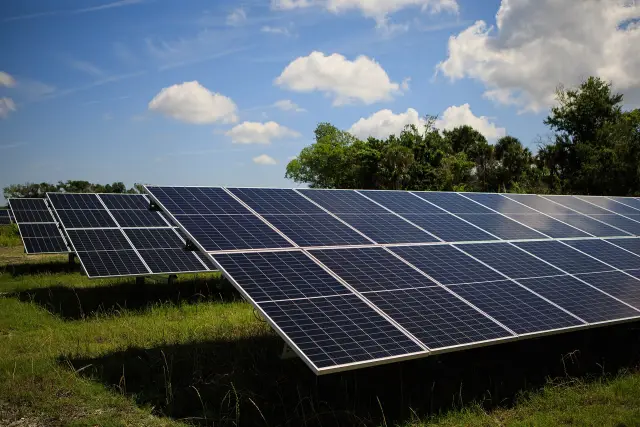
Higher education is part of Cocoa too. The city counts Eastern Florida State College, the University of Central Florida's Cocoa campus and the Florida Solar Energy Center within its borders (City of Cocoa). The Historic Cocoa Village guide covers parking, landmarks and events in more detail.
What is changing in Cocoa right now?
The largest change under way in Cocoa is a planned Brightline passenger rail station, funded in 2026 by a Federal Railroad Administration award of approximately $57.5 million.
In a news flash posted August 11, 2026, the City of Cocoa said the Federal Railroad Administration selected the Cocoa Multimodal Station and Rail Project and awarded approximately $57.5 million for final design and construction (City of Cocoa station grant news). The Space Coast Transportation Planning Organization's 2016 station location analysis picked a site near US 1, SR 528 and SR 501 (Clearlake Road), and its intermodal feasibility study followed in October 2024. Brightline already runs on the Florida East Coast Railway tracks, which the city says parallel US 1 through Brevard County from SR 528 south.
The state and federal releases from the October 6, 2026 event in Cocoa give the station grant as $57 million, for a new Brightline in-line rail station, a multi-use access road and a new segment of double track (FDOT release). The two releases give different totals for the whole package: the FDOT release gives $416 million in federal funding, while the U.S. Department of Transportation release on the same event gives $413 million (USDOT release). Both list $356 million for safety upgrades at 910 highway-rail crossings in Florida and another $100 million from the state.
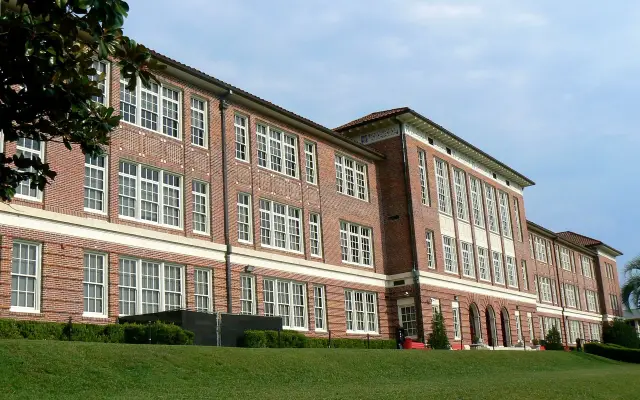
Two closer-in changes are on city pages. An active City of Cocoa alert notes FDOT safety improvements on Fiske from Barbara Jenkins to King Street (SR 520), with construction through fall 2026 (City of Cocoa alert banner). The Leon and Jewel Collins Museum of African American History and Culture, at 307 Blake Ave. in the Diamond Square community, is not yet open to the public; its home is the Harry T. Moore Center, a 1924 building that was the original campus of Monroe High School, for which the city received 2015 Division of Historical Resources grants to help renovate it (Collins Museum facility page).
What should Cocoa residents know about hurricanes and flooding?
Cocoa takes part in the National Flood Insurance Program as community 120020 and holds a Community Rating System class 9, worth a 5 percent discount on flood policies.
FEMA's community status book lists the City of Cocoa at CRS class 9 since April 1, 2023, with the same 5 percent discount inside and outside the special flood hazard area, and a currently effective flood map dated January 29, 2021 (FEMA NFIP community status, Cocoa). Cocoa's first flood insurance rate map dates to September 28, 1979.
For hurricane warnings, evacuation and shelters, the Brevard County safety section covers AlertBrevard sign-up, emergency management, hurricane shelters and the special needs registry, sandbag sites and mobile home evacuation. Cocoa Water Customer Service is (321) 433-8400, the same number the city gives for water, sewer and reclaimed main-break reports (City of Cocoa water page).
Frequently asked questions
What county is Cocoa, Florida in?
Cocoa is in Brevard County; the City of Cocoa describes itself as centrally located in the county, on the Indian River. City Hall is at 65 Stone Street, and the city runs its own police department, water utility and parks.
What is the population of Cocoa, FL?
The Census Bureau ACS 2020-2024 5-year estimates put Cocoa at 19,554 residents, with a median age of 44.9 and 21.8 percent aged 65 or older.
When does the Cocoa City Council meet?
Regular Cocoa City Council meetings are at 6:00 p.m. on the second and fourth Tuesday of each month in the Council Chambers at 65 Stone St. The council has five members: a mayor elected at large and four members elected by district.
Is Cocoa getting a Brightline station?
A station is funded but not built. The Federal Railroad Administration awarded approximately $57.5 million in 2026 for final design and construction of the Cocoa Multimodal Station; the planned site is near US 1, SR 528 and SR 501 (Clearlake Road).
Who provides water in Cocoa?
The City of Cocoa runs its own water utility, which serves more than 85,000 accounts across roughly a third of Brevard County. Customer service and main-break reports go to (321) 433-8400.
Sources
- City Council (City of Cocoa) https://www.cocoafl.gov/85/City-Council Used for: council-manager form, five members, meeting schedule and place
- History and Culture (City of Cocoa) https://www.cocoafl.gov/908/History-Culture Used for: settlement, naming, incorporation, population history
- Discover Cocoa (City of Cocoa) https://www.cocoafl.gov/1784/Discover-Cocoa Used for: roads, airport distance, Village attractions, events, colleges
- City of Cocoa FAQs (annexation, garbage) https://www.cocoafl.gov/FAQ.aspx?QID=552 Used for: trash schedule, City Hall hours
- ACS 2020-2024 5-year DP05, Cocoa city, Florida (U.S. Census Bureau) https://data.census.gov/api/access/data/table?id=ACSDP5Y2024.DP05&g=160XX00US1213150 Used for: population, median age, 65 and over
- ACS 2020-2024 5-year DP03, Cocoa city, Florida (U.S. Census Bureau) https://data.census.gov/api/access/data/table?id=ACSDP5Y2024.DP03&g=160XX00US1213150 Used for: household income, commute
- ACS 2020-2024 5-year DP04, Cocoa city, Florida (U.S. Census Bureau) https://data.census.gov/api/access/data/table?id=ACSDP5Y2024.DP04&g=160XX00US1213150 Used for: housing units, tenure, value, rent
- 2024 Census Gazetteer, Florida places (U.S. Census Bureau) https://www2.census.gov/geo/docs/maps-data/data/gazetteer/2024_Gazetteer/2024_gaz_place_12.txt Used for: land and water area
- NFIP Community Status Book, Cocoa (FEMA) https://www.fema.gov/api/open/v1/NfipCommunityStatusBook?$filter=contains(communityName,%27COCOA%27) Used for: NFIP community number, CRS class, map date
- Cocoa Multimodal Station Grant Awarded (City of Cocoa news flash) https://cocoafl.gov/CivicAlerts.aspx?AID=2211 Used for: FRA award, SCTPO studies, station location
- FDOT news release, October 6, 2026 https://www.fdot.gov/info/co/news/2026/10062026 Used for: rail package total, Cocoa station funding
- U.S. DOT briefing room release, October 6, 2026 https://www.transportation.gov/briefing-room/trumps-transportation-department-celebrates-416-million-investment-upgrade-rail Used for: rail package total (different figure), Cocoa station funding
- Leisure Services (City of Cocoa) https://www.cocoafl.gov/128/Leisure-Services Used for: facilities managed, office address and hours
- Leon and Jewel Collins Museum facility page (City of Cocoa) https://www.cocoafl.gov/1742/Leon-and-Jewel-Collins-Museum-of-African Used for: museum status, 1924 building, Monroe High School
- Water Treatment (City of Cocoa) https://www.cocoafl.gov/1668/Water-Treatment Used for: water accounts, service area, treatment plants
- Riverfront Park facility page (City of Cocoa) https://www.cocoafl.gov/facilities/facility/details/cocoa-riverfront-park-4 Used for: address, acreage, hours, amenities
- Cocoa Police Department https://www.cocoapolice.com/ Used for: address, hours, non-emergency line
Published by Rytas Dirse, Solo Founder & AI Architect
Built with AI, held to quality gates. US sources, US brands, facts only.
How this page was made
Digital Towns uses AI assistance to research and write its guides, and every page is only as good as the sources it cites. Our goal is the most accurate, useful local information possible.
If you see an error, or anything you can show is false, tell us right away and we will take a third look.
Report an error
Thank you. We'll take a third look and correct the page if it's wrong.
