Short answer: NASA's Kennedy Space Center viewing page links to the agency's most up-to-date launch schedule and its free Virtual Guest Program, launch weather from the 45th Weather Squadron, and boating restrictions from (800) 470-7232 and Coast Guard Channel 16. NASA lists 12 public viewing spots from Titusville to Cocoa Beach. The FAA says the launch site itself gets no sonic boom at liftoff, while each returning Falcon Heavy booster is predicted to make two, up to six per mission.
Last verified: October 21, 2026, against the sources listed at the end of this page.
Where is the official Cape Canaveral launch schedule?
NASA's Kennedy Space Center viewing page links to the agency's most up-to-date launch schedule, and its free Virtual Guest Program emails schedule changes, so this Space Coast hub lists no launch dates (NASA, See a Launch Up Close).
This page points to the agencies that publish live notices instead of copying them. NASA's Kennedy Space Center viewing page links to the agency's most up-to-date launch schedule and describes the Virtual Guest Program as free, covering all launches and milestone events with curated resources, schedule changes and mission information (NASA). The same page points to NASA+ and the NASA App for live coverage.
| Need | Official source | What it publishes |
|---|---|---|
| Launch dates and changes | NASA Kennedy Space Center | Launch schedule link, free Virtual Guest Program, NASA+ coverage |
| Launch weather | 45th Weather Squadron, Patrick Space Force Base | Launch forecast support, planning forecasts, KSC/CCSFS 24hr rainfall data, Launch Forecast FAQ |
| Boating and flying near a launch | Launch hazard line and U.S. Coast Guard | (800) 470-7232; Coast Guard broadcasts on Marine Band Channel 16 |
| Playalinda closures | National Park Service, Canaveral National Seashore | Launch viewing hours, vista and road closures |
| Jetty Park on launch days | Canaveral Port Authority | Manages park operations during launch windows; its 2025 report gives the count of launches the park was open for |
The sources behind the table are NASA for the schedule and the hazard line (NASA), the 45th Weather Squadron for weather (45th Weather Squadron), the Park Service for Playalinda (NPS) and the Port's 2025 report for Jetty Park (Port annual report). The Port Canaveral website also carries a Launch Schedule link, but on October 21, 2026 it redirected to a news site, so it is not used here.
Where do Space Coast rocket launches lift off?
Every launch in Florida begins on a pad at Cape Canaveral Space Force Station or Kennedy Space Center, according to NASA (NASA Kennedy).
The FAA's March 2025 draft environmental assessment for Falcon 9 operations at SLC-40 says launch frequency from both sites has increased steadily in recent years and counts 66 total launches across Kennedy Space Center and Cape Canaveral Space Force Station in 2023 (FAA Draft EA, SLC-40). The Canaveral Port Authority's report to Space Florida counts 109 launches scheduled in 2025 (Port 2025 annual report).
Some Kennedy Space Center pads carry long histories. Apollo 10 was the first mission to begin at Launch Pad 39B, lifting off May 18, 1969, to rehearse the first Moon landing, and three Skylab crews launched from Pad B in 1973 (NASA, Launch Complex 39B). NASA has since replaced or upgraded the Apollo and Space Shuttle era subsystems at 39B to support the Space Launch System, Orion and a multi-user spaceport, and a new liquid hydrogen tank under build-up at the pad will hold about 1.25 million gallons of usable liquid hydrogen.
Who forecasts the weather for a Cape Canaveral launch?
Launch weather on the Space Coast is forecast by the 45th Weather Squadron at Patrick Space Force Base, which describes its job as exploiting the weather to assure safe access to space (45th Weather Squadron).
The squadron's public page groups its resources as Launch Forecast Support, Special Weather Support, Weather Safety, Hurricane Information, Planning Forecasts, KSC/CCSFS 24hr Rainfall Data and a Launch Forecast FAQ (Patrick Space Force Base). Its listed contacts are an email for Cape and KSC weather support and a DSN line for Patrick SFB weather support and aircrew briefings.
NASA's spectator advice is to dress for weather that can change quickly in the Sunshine State and to pack drinks and snacks because launch windows can be long (NASA); the Park Service adds that Playalinda Beach Road reopens right after a successful launch or a confirmed cancellation (Canaveral National Seashore).
Where can the public watch a launch on the Space Coast?
NASA lists 12 public viewing locations from Titusville to Cocoa Beach, the Park Service names the Playalinda District of Canaveral National Seashore as the closest view in the park, and the Port opens Jetty Park for some launches (NASA viewing list).
NASA's list runs north to south from Marina Park at 501 Marina Road and Space View Park at 8 Broad Street in Titusville, along U.S. 1 parks in Titusville, to the westbound SR 528 causeway over the Banana River, Jetty Park at the east end of Port Canaveral, Alan Shepard Park at the east end of SR 520 and Lori Wilson Park at 1500 N. Atlantic Ave in Cocoa Beach (NASA). NASA also notes that Kennedy Space Center Visitor Complex offers the closest public viewing of launches, with launch viewing tickets for some launches. The Brevard County guide to where to watch rocket launches covers public viewing sites across the county.
Playalinda has its own rules. Launches can be watched there only during park hours, 6:00 AM to 8:00 PM in summer and 6:00 AM to 6:00 PM in winter; park vistas in the Playalinda District close during launches, and Playalinda Beach Road closes between the entry gate and parking lot 1 thirty minutes before liftoff (NPS, Canaveral National Seashore). The Park Service may restrict entry once the park fills, and NASA can close NASA-owned parts of the park without notice.
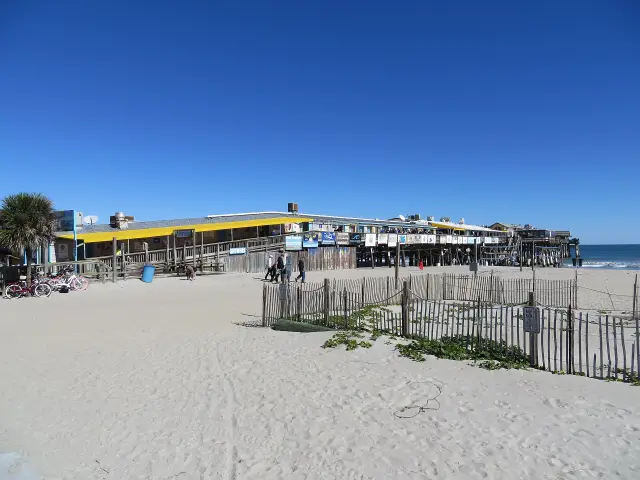
Jetty Park is not open for every launch: in 2025 it was open for 56 of the 109 launches scheduled, and during high-profile launches the Port employs Brevard County Sheriff's Office deputies to manage sightseers and traffic along the S.R. 528 corridor (Port 2025 annual report). NASA's road advice for Space Coast launch days is to leave home at the appropriate time for the extra traffic, not to pull off alongside the road and follow directions from security, police and emergency personnel (NASA).
Why do Space Coast residents hear sonic booms after a launch?
FAA environmental documents for Falcon launches from Cape Canaveral say the launch site itself does not get a sonic boom during launch, while booster landing sites and the areas around them may (FAA, Falcon Program Final EA).
The FAA's Falcon program assessment defines a sonic boom as the shock wave from the displacement of air in supersonic flight, impulsive and very brief, often less than one second (FAA). It adds that the boom footprint is usually some distance downrange of the launch site, and that Section 4(f) properties could be exposed to a sonic boom during booster returns to Cape Canaveral Air Force Station (CCAFS), the name used in the document.
The FAA finding for Falcon Heavy landings at Landing Zone 1 predicts two sonic booms from each returning booster, one louder than the other, for up to six booms per mission (FAA, Falcon Heavy FONSI). Air Force modeling cited there puts the peak at about 5 to 7 pounds per square foot (psf) on CCAFS property in the near field, with more than 0.5 psf reaching dozens of miles beyond.
The FAA's March 2025 draft assessment for SLC-40 explains what those numbers mean for buildings: below 1 psf, no damage to structures is expected, while peaks of 2 to 4 psf carry a low probability of damage to glass, plaster, roofs and ceilings of well-maintained structures, rising from 4 to 10 psf (FAA Draft EA). The same document says Falcon 9 launches from SLC-40 produce 90 to 100 dBA SEL in parts of Titusville, Port St. John, Sharpes, Merritt, Cape Canaveral and Cocoa Beach, which could awaken up to 4 percent of people, and that booster landings at LZ-1 and LZ-2 exceed 90 dBA SEL in parts of Cape Canaveral and Cocoa Beach. The FAA left paper copies of that draft at the Cape Canaveral, Merritt Island, Cocoa Beach and Titusville public libraries and the Catherine Schweinsberg Rood Central Library.
What happens on the water around Port Canaveral during a launch?
Launches close parts of the ocean off Cape Canaveral as well as the beach: mariners and pilots can learn about launch hazard areas by calling (800) 470-7232, and the U.S. Coast Guard broadcasts the restrictions on Marine Band Channel 16 (NASA).
Port Canaveral is the sea base for much of the recovery work. In fiscal year 2025 the Port counted 90 booster recoveries and 190 fairing recoveries, with two launch service providers, SpaceX and Blue Origin, three landing vessels and three support vessels (Port space operations). The partnership began in late December 2015, when the SpaceX drone ship known as OCISLY arrived at Port Canaveral, and in April 2016 that ship had the first at-sea landing of a SpaceX first stage, which the Port calls the first ever drone ship landing.
The Port worked with the U.S. Coast Guard, Space Launch Delta 45 and Space Florida to change how launch notices are issued and to improve Notices to Mariners that keep commercial and recreational vessels out of launch security zones and mission hazard areas (Port 2025 annual report). The Port's report also records that vessels at Port Canaveral have supported the space program since 1956.
Which Space Coast launch guide answers which question?
The guides listed below this answer split the Space Coast launch topic by question: where to stand, which park rules apply, and how a launch day changes travel around Port Canaveral and Titusville.
Viewing-site questions build on the NASA list above, which runs from Titusville parks on the Indian River south to Cocoa Beach (NASA viewing list). Park guides for Canaveral National Seashore and Playalinda Beach cover the launch-day closures set by the Park Service, and the Jetty Park guides cover the Port park that opened for 56 of 109 launches in 2025 (Port annual report). The Space Coast cruise guides cover the S.R. 528 corridor, where the Port employs sheriff's deputies to manage sightseers and traffic during high-profile launches (Port annual report).
For background on the region itself, the Digital Towns South Brevard guide to what the Space Coast is covers the name and the area. Last verified: October 21, 2026, by re-reading the NASA viewing and Pad 39B pages, the 45th Weather Squadron page, the Playalinda launch rules, the Port space operations page and 2025 report, and three FAA sonic boom documents.
Frequently asked questions
When is the next rocket launch from Cape Canaveral?
Launch dates change often, so this guide does not list them. NASA's Kennedy Space Center viewing page links to the agency's most up-to-date launch schedule, and its free Virtual Guest Program emails schedule changes for every launch.
Why do sonic booms happen after some Cape Canaveral launches?
The FAA says the launch site itself does not get a sonic boom during launch, while booster landing sites and nearby areas may. Each returning Falcon Heavy booster is predicted to make two booms, up to six per mission.
Can sonic booms from rocket landings damage a house?
The FAA's March 2025 draft assessment says no structural damage is expected below 1 psf, with a low probability of damage to glass, plaster, roofs and ceilings at 2 to 4 psf; modeled Falcon Heavy booms exceed 0.5 psf dozens of miles from Cape Canaveral.
Is Playalinda Beach open during a launch?
Yes, if the launch falls within park hours, but the Park Service closes Playalinda District vistas, closes the beach from parking lot 1 a quarter mile south to the Kennedy Space Center boundary and shuts Playalinda Beach Road between the entry gate and parking lot 1 thirty minutes before liftoff.
Who should boaters call about launch closures near Port Canaveral?
NASA lists (800) 470-7232 for mariners and pilots to learn about launch hazard areas and restrictions, and the U.S. Coast Guard broadcasts the information on Marine Band Channel 16.
Sources
- NASA Kennedy Space Center, See a Launch Up Close https://www.nasa.gov/kennedy/see-a-launch-up-close Used for: launches begin at CCSFS or KSC, NASA launch schedule link, Virtual Guest Program, NASA+, public viewing locations, mariner line (800) 470-7232, Channel 16, traffic tips
- Patrick Space Force Base, 45th Weather Squadron https://www.patrick.spaceforce.mil/About-Us/Weather/ Used for: mission statement, launch forecast support, planning forecasts, rainfall data, Launch Forecast FAQ
- Canaveral Port Authority, Space Operations https://www.portcanaveral.com/port-operations/space-operations Used for: FY2025 booster and fairing recoveries, landing vessels, providers, OCISLY December 2015 and April 2016, Notices to Mariners
- Canaveral Port Authority, 2025 Annual Report to Space Florida (PDF) https://www.portcanaveral.com/docs/default-source/port-operations/2025-annual-report-to-space-florida-3-_ada.pdf?sfvrsn=f423998f_4 Used for: Jetty Park open for 56 of 109 launches scheduled in 2025, BCSO deputies on S.R. 528 corridor, Coast Guard and SLD45 notices
- National Park Service, Canaveral National Seashore Rocket Launch Viewing https://home.nps.gov/cana/planyourvisit/rocket-launch-viewing.htm Used for: Playalinda launch hours, vista and road closures, capacity
- FAA, FONSI for Falcon Heavy Return to Launch Site at LZ-1 (PDF) https://www.faa.gov/sites/faa.gov/files/space/environmental/nepa_docs/FAA_FONSI_for_Falcon_Heavy_RTLS_at_LZ-1.pdf Used for: two sonic booms per returning booster, up to six per mission, 5 to 7 psf near-field, over 0.5 psf dozens of miles
- FAA, Draft EA Falcon 9 Operations at SLC-40, March 2025 (PDF) https://www.faa.gov/media/91711 Used for: 66 launches in 2023, overpressure damage thresholds, launch noise in Titusville to Cocoa Beach, library copies
- FAA, SpaceX Falcon Program Final EA and FONSI (PDF) https://www.faa.gov/sites/faa.gov/files/space/environmental/nepa_docs/SpaceX_Falcon_Program_Final_EA_and_FONSI.pdf Used for: definition of a sonic boom, launch site not boomed at liftoff, Section 4(f) exposure during booster returns
- NASA, Launch Complex 39B reference https://www.nasa.gov/reference/launch-complex-39b/ Used for: Apollo 10 first launch from 39B May 18, 1969, Skylab 1973, SLS and multi-user upgrades
Published by Rytas Dirse, Solo Founder & AI Architect
Built with AI, held to quality gates. US sources, US brands, facts only.
How this page was made
Digital Towns uses AI assistance to research and write its guides, and every page is only as good as the sources it cites. Our goal is the most accurate, useful local information possible.
If you see an error, or anything you can show is false, tell us right away and we will take a third look.
Report an error
Thank you. We'll take a third look and correct the page if it's wrong.